 Living log
Aeonium experimental
Aeonium HarworthiiWikipedia ↗
- Type
- succulent
- Acquired
- 2024-06-24
- Origin
- garden centre
- Status
- alive
- Last pot
- Ø 17.5 cm · 8 cm deep (2025-09-10)
- Last soil
- organic 10% · gritty 60% · pumice 10% · akadama 20% (2025-09-10)
- Pot
- Ø 17.5 cm · 8 cm deep
- Soil
- organic 10% · gritty 60% · pumice 10% · akadama 20%
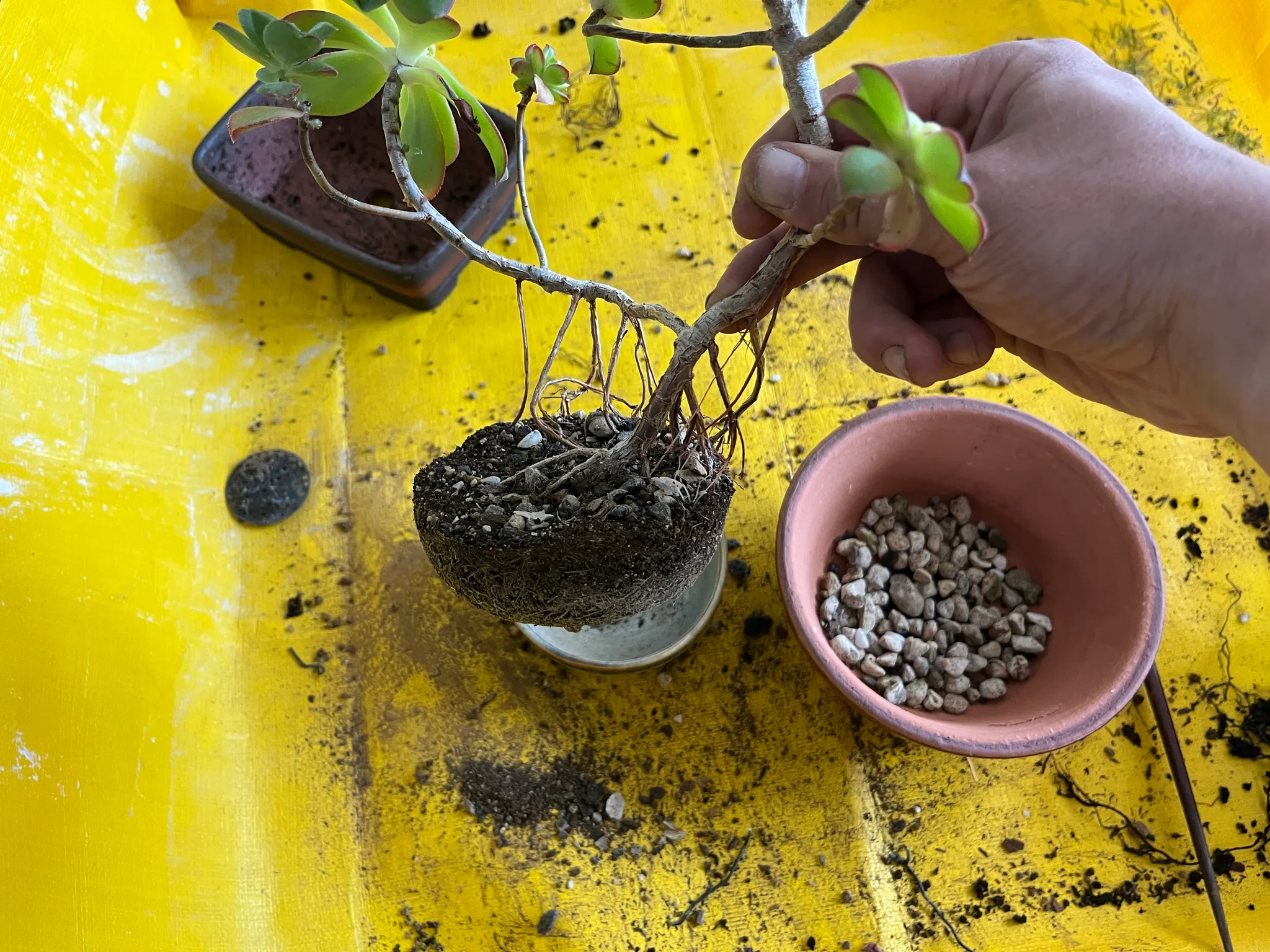
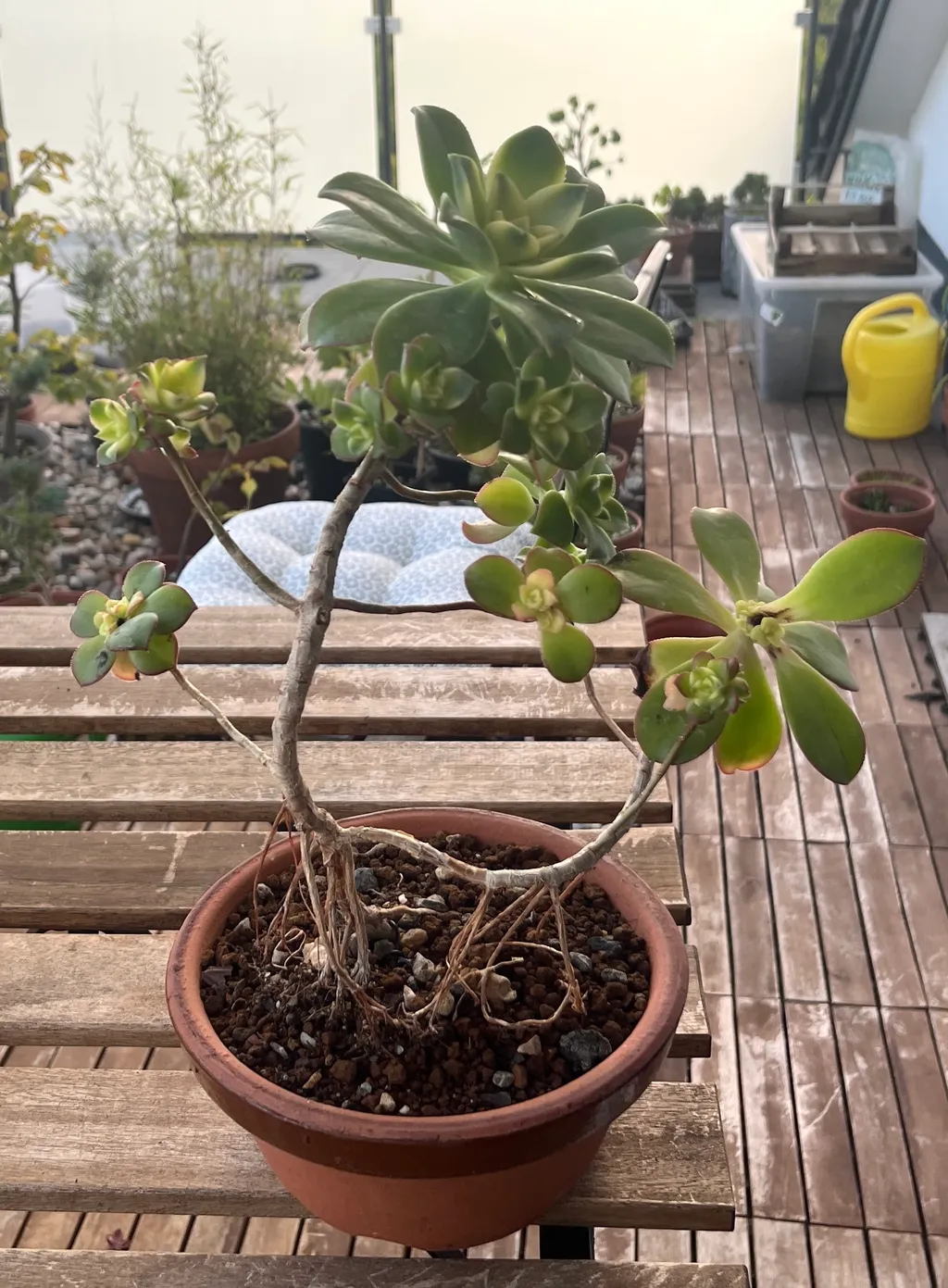
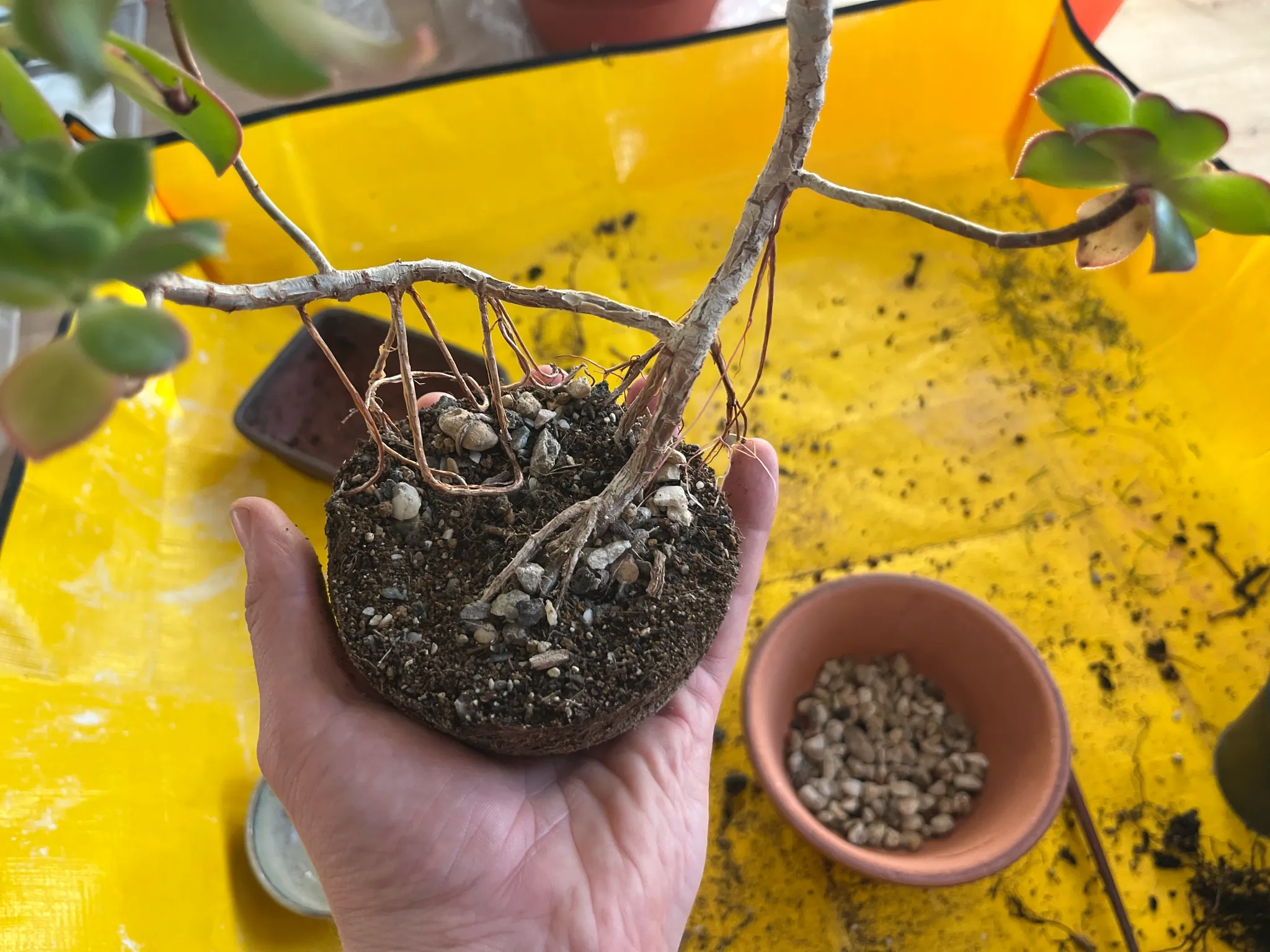
Ok, I expect this plant to grow in the winter again - so maybe now is an ok-ish time to repot it. My experience with succulents is limited so no experiments with root pruning or fancy intervention, just a new pot with more space. I ordered a few Tokoname pots at Bonsai Enger.
Tokoname pots are common bonsai equipment for many growers. Tokoname is a region in Japan where many ceramic artists create bonsai pottery art at a high level. But the ones I ordered are relatively ordenary and used mostly for training. This one should fit the succulent well. It’s significantly larger than the old one and provides a good drainage, since the pot also holds moisture which can evaporate to the outside.
I’ll just treat the plant as usual, not to much but regular watering and in the winter I’ll fertalize it with non-fancy cacti fertalizer around once every two weeks.
- height
- 27 cm
- width
- 20 cm
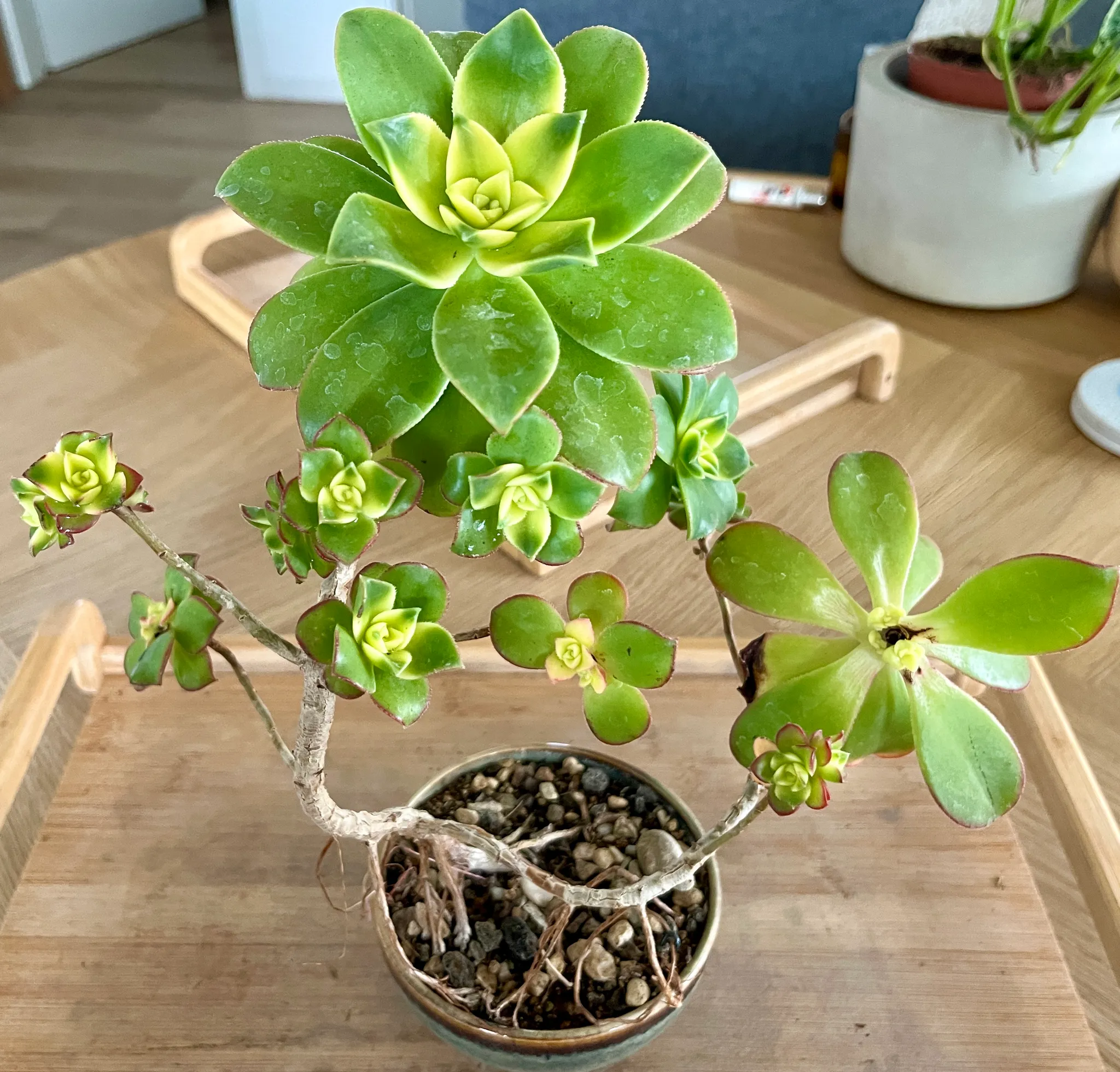
This is 1-2 months post pruning. I haven’t cut all but where I did you can see the old leaves generate new mini rosettes. Every branch that was cut got at least one posterior. On the right side you can still see the big old leaves and it produced 3 sub-branches.
I forgot to document the intervention at sometime in July or August where I pruned it the first time. My idea was to simply cut the ends of and I noticed that the rosette forming leaves have so little space that I’v tried to cut it back to the last 1-3 leaves that look healthy. These leaves I hoped will pull the sap and the branches will ramify.
- height
- 24 cm
- width
- 25 cm
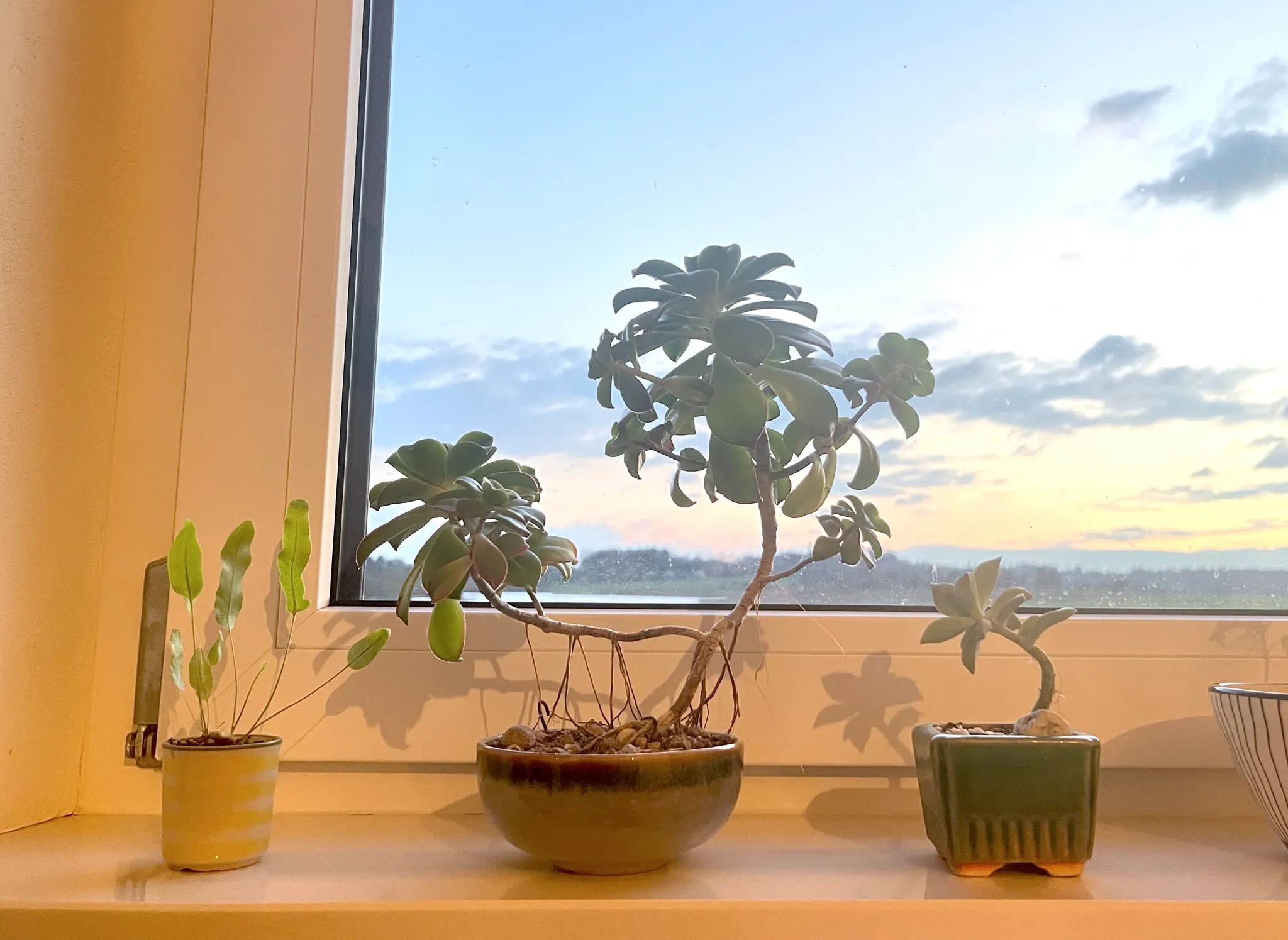
It’s been a while since the last update and over the winter it really grew a lot. As you can see the small rosettes developed into lenky branches. The lower side branch also grew lenky together with more airial roots that I didn’t had to guide towards the soil. The plant is now not even one year in almost double the size. Even though I wanter it irregularly sometimes. Since the soil is very gritty (low organic parts) I water more often then I would for other succulents. While it grows it has the habit of throwing off old leaves quickly.
I wonder if this plant survives a pruning. Wasn’t brave enough yet but if theres a possibility to produce branching from prune work, that would open up more free roam for styling. But I don’t want to get greedy.
- height
- 14 cm
- width
- 12 cm
- height
- 14 cm
- width
- 12 cm
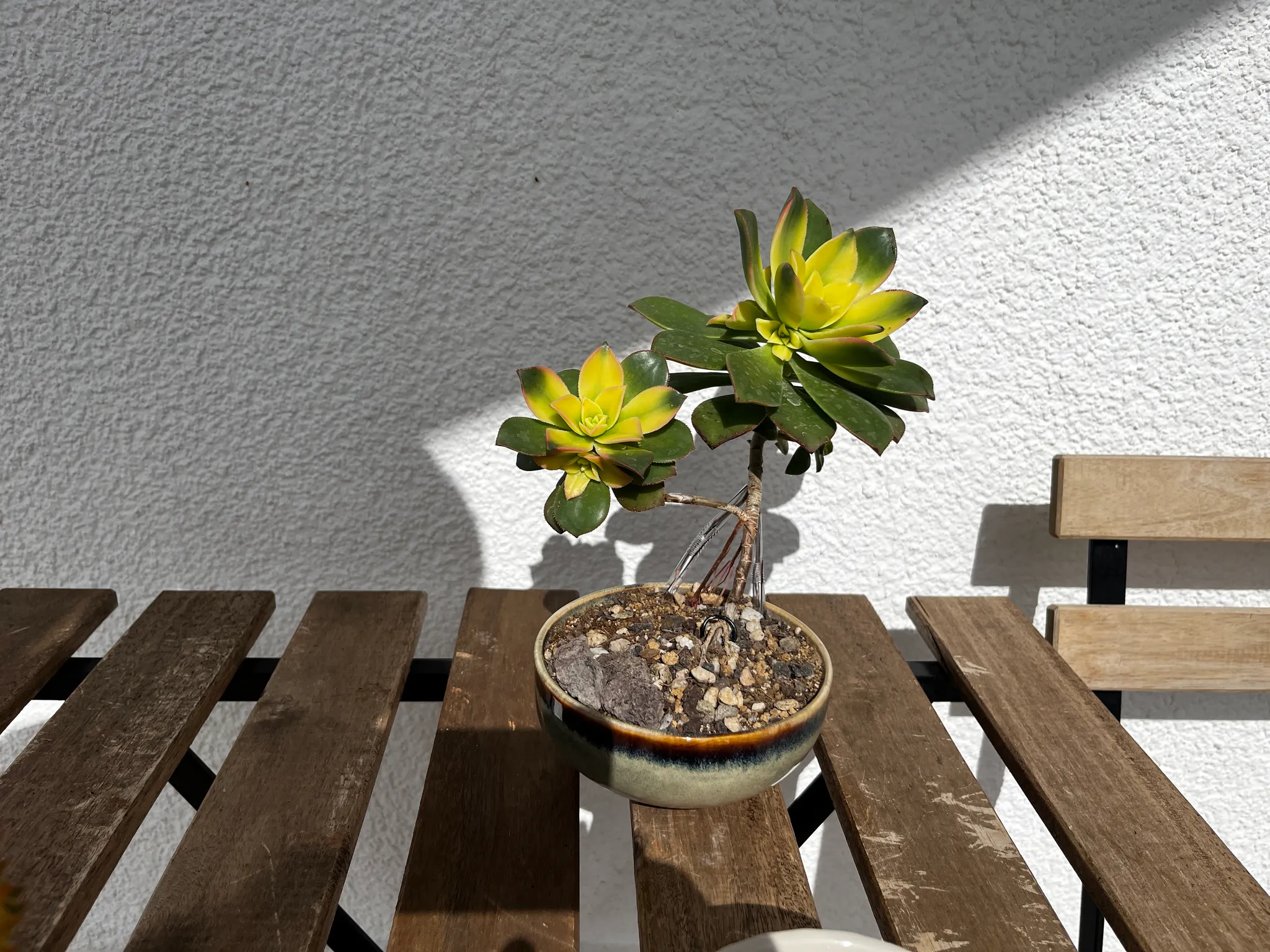
Took the wire off. It didn’t bite yet, although the main stem has experienced light pressure from the wire. This should outgrow fast. I got to admit that my solution to the anchoring wire to prevent the succulent from falling out of the pot is not so nice. Tiny detail. As long as it grows and the color keeps changing in such beautiful manner I’m more than happy. The 7.50€ I’ve spent for this plant are more than worth it.
Also notice that it grows new rosettes between the leaves. It looks like these will be branches someday.
- height
- 14 cm
- width
- 12 cm
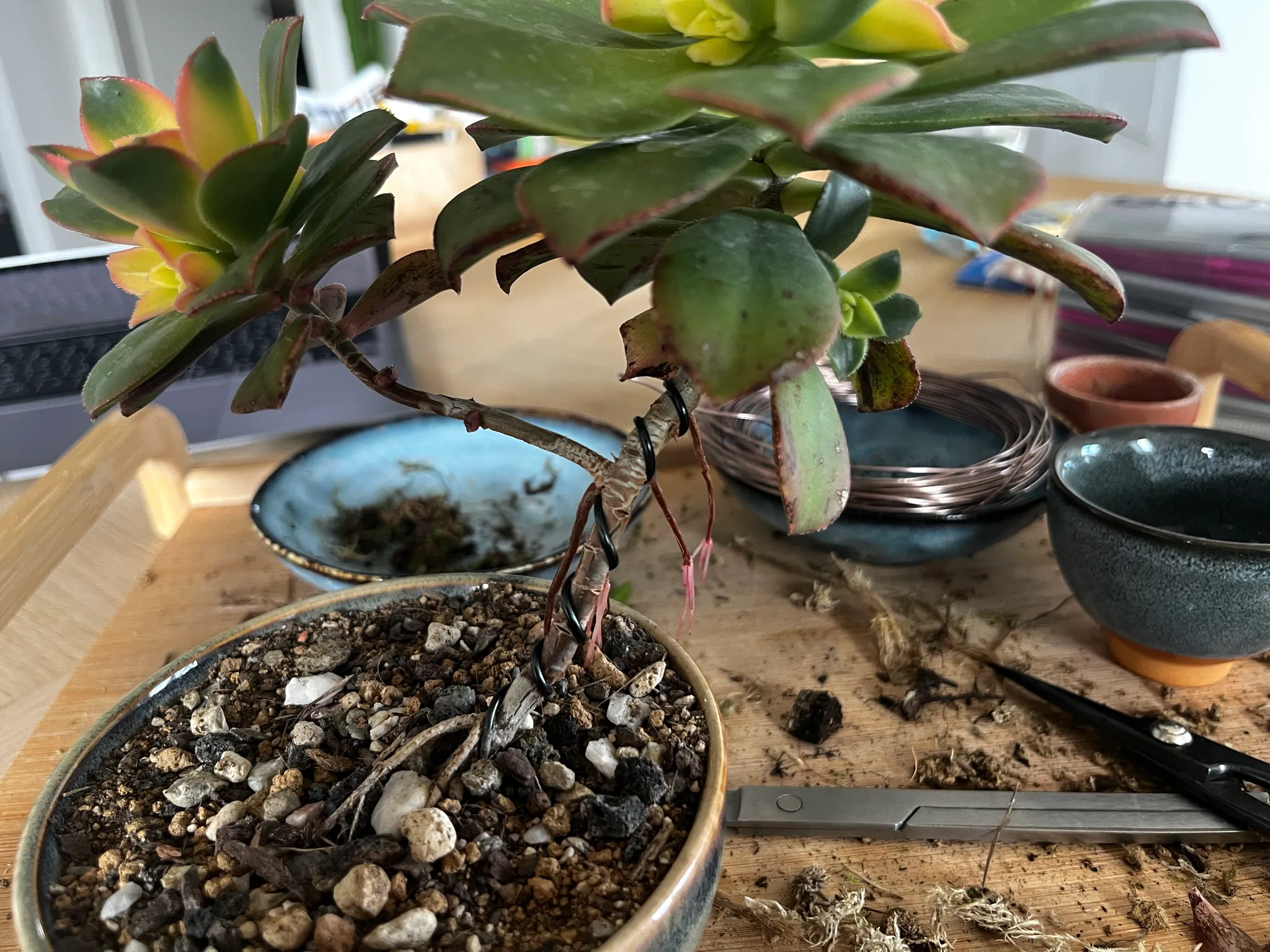
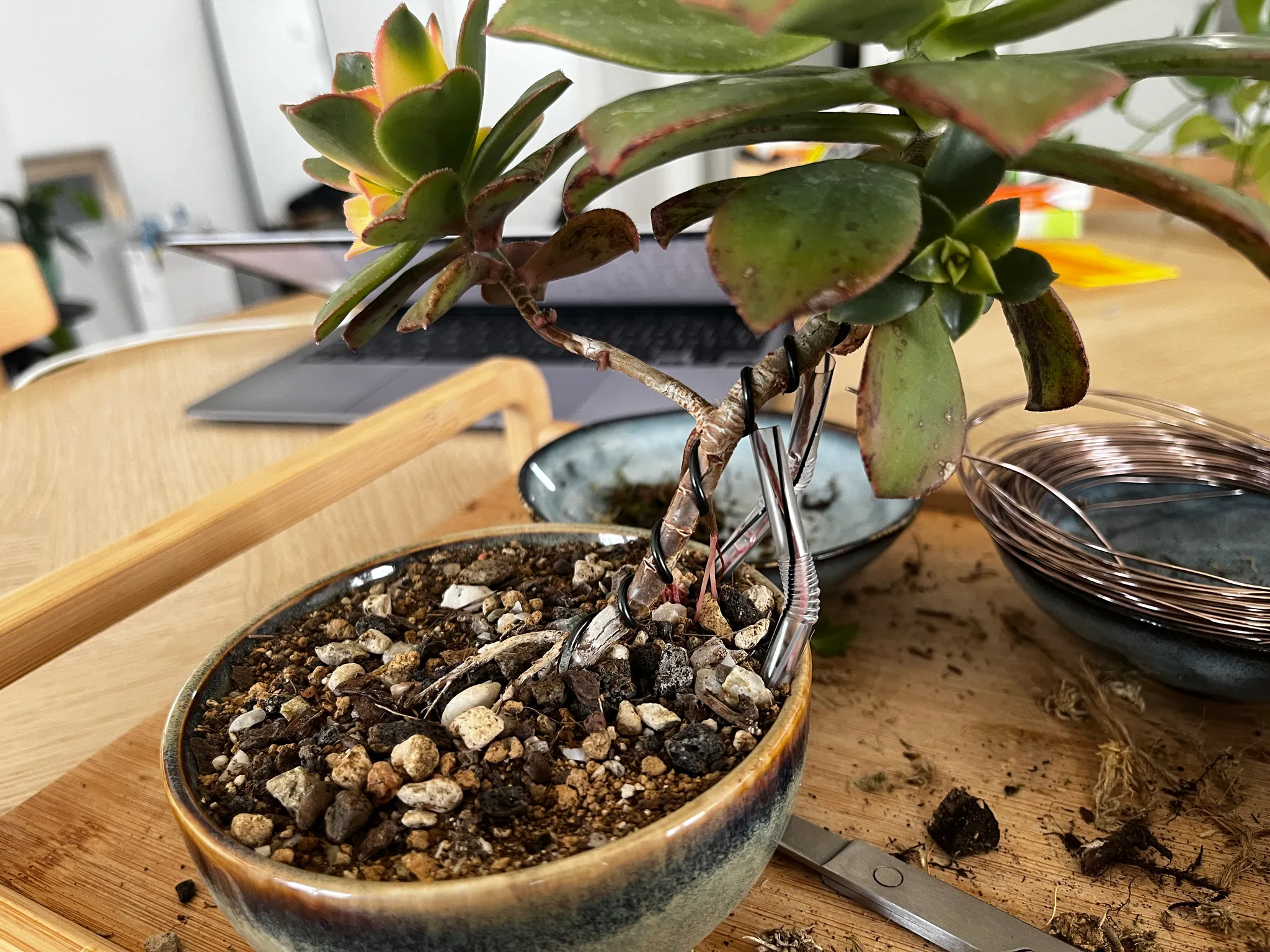
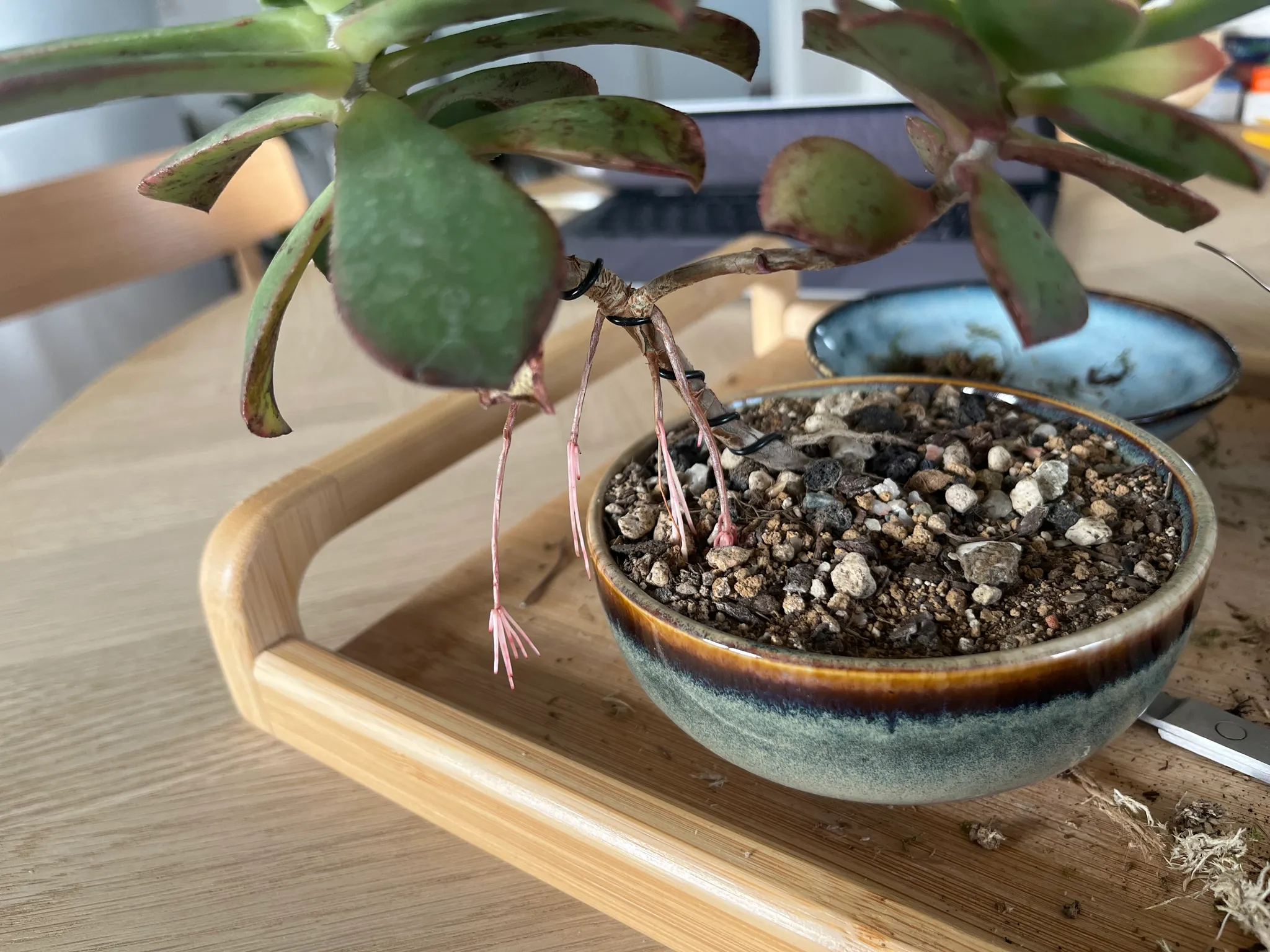
This succulent is a little dream. I placed it outside on the balcony in a partially shaded spot and it grows like a charm. The angle sometimes looks severe to me since the top is growing to healthy I sometimes think it’s falling over. It turns out to be pretty stable to keep indoors, but harsh winds could easily knock it over.
Anyways the plant grew small airal roots that look a bit like little hands that reach for the ground. This gave me the idea to lead the roots to the ground maybe they can stablize it a little or thinken up when they reach the ground. So I asked by friends around if anyone still has plastic straws and I was giften some. I stuck them into the ground and guided the root ends into the straw - maybe it helps.
Just for reference I saw on youtube people doing this in wet countries like India. Bonsai growers there use this technique to guide arial roots of ficus or other plants.
- height
- 12 cm
- width
- 10 cm
- Pot
- Ø 11 cm · 5 cm deep
- Soil
- organic 20% · gritty 70% · akadama 10%
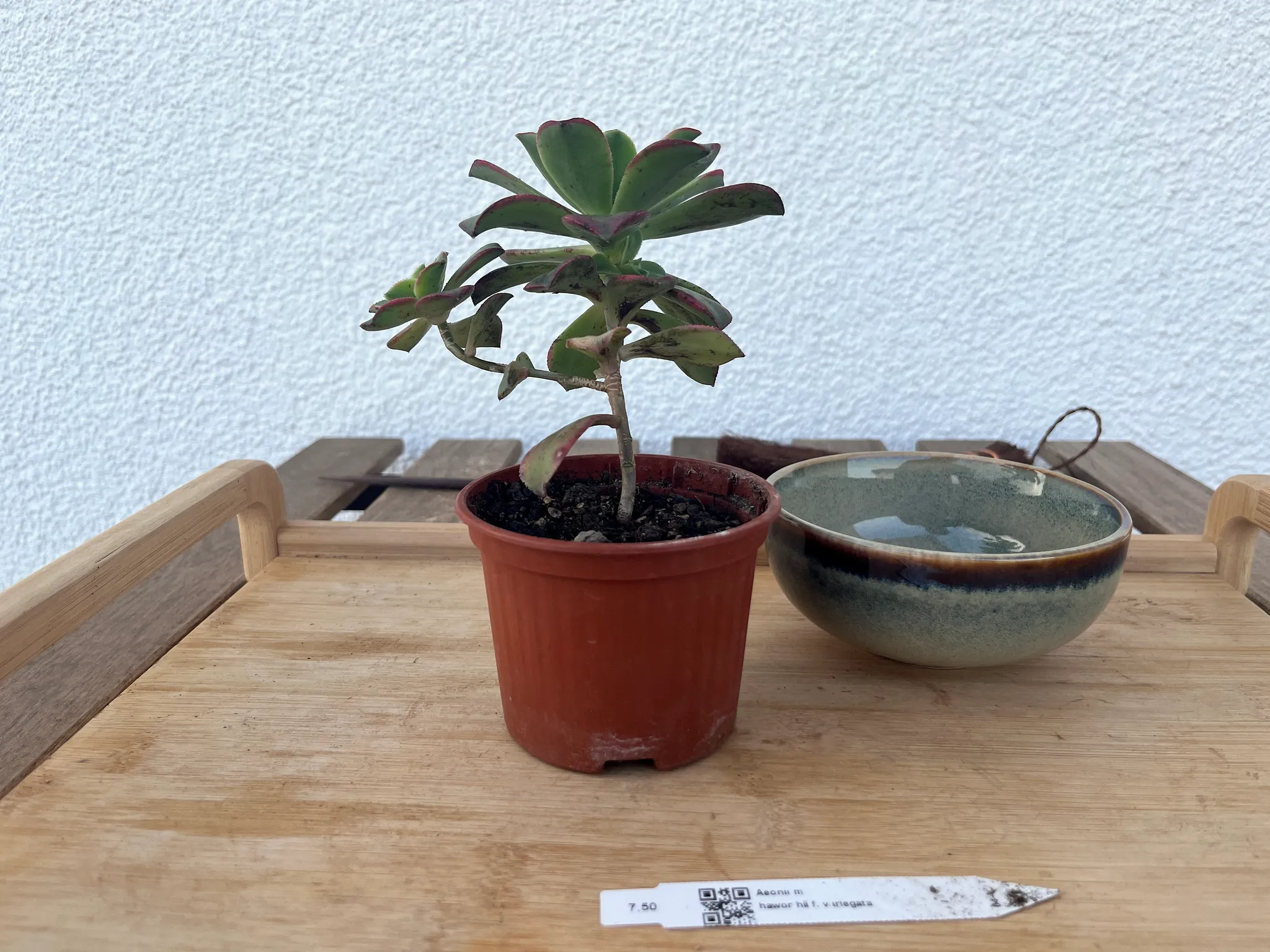
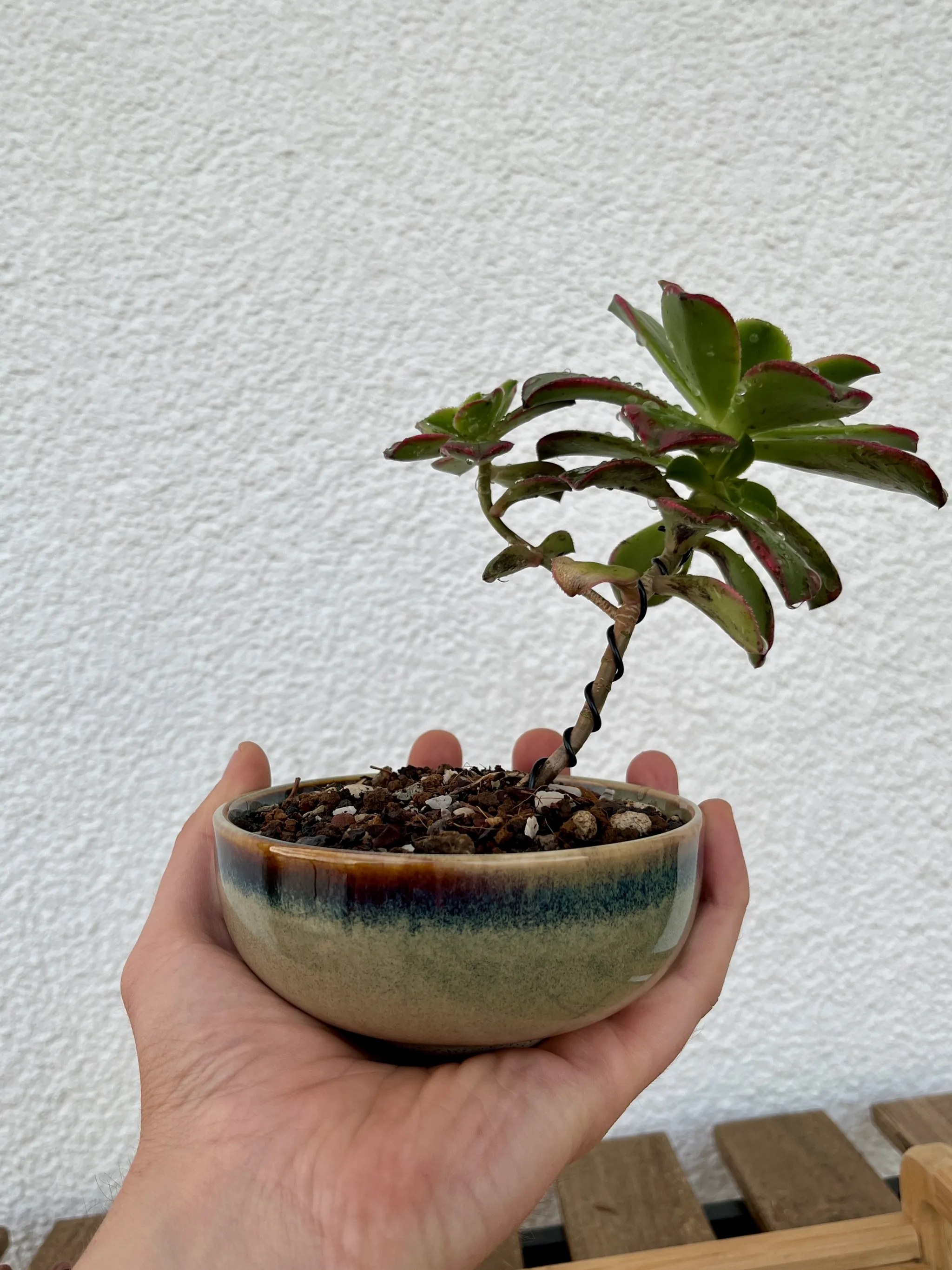
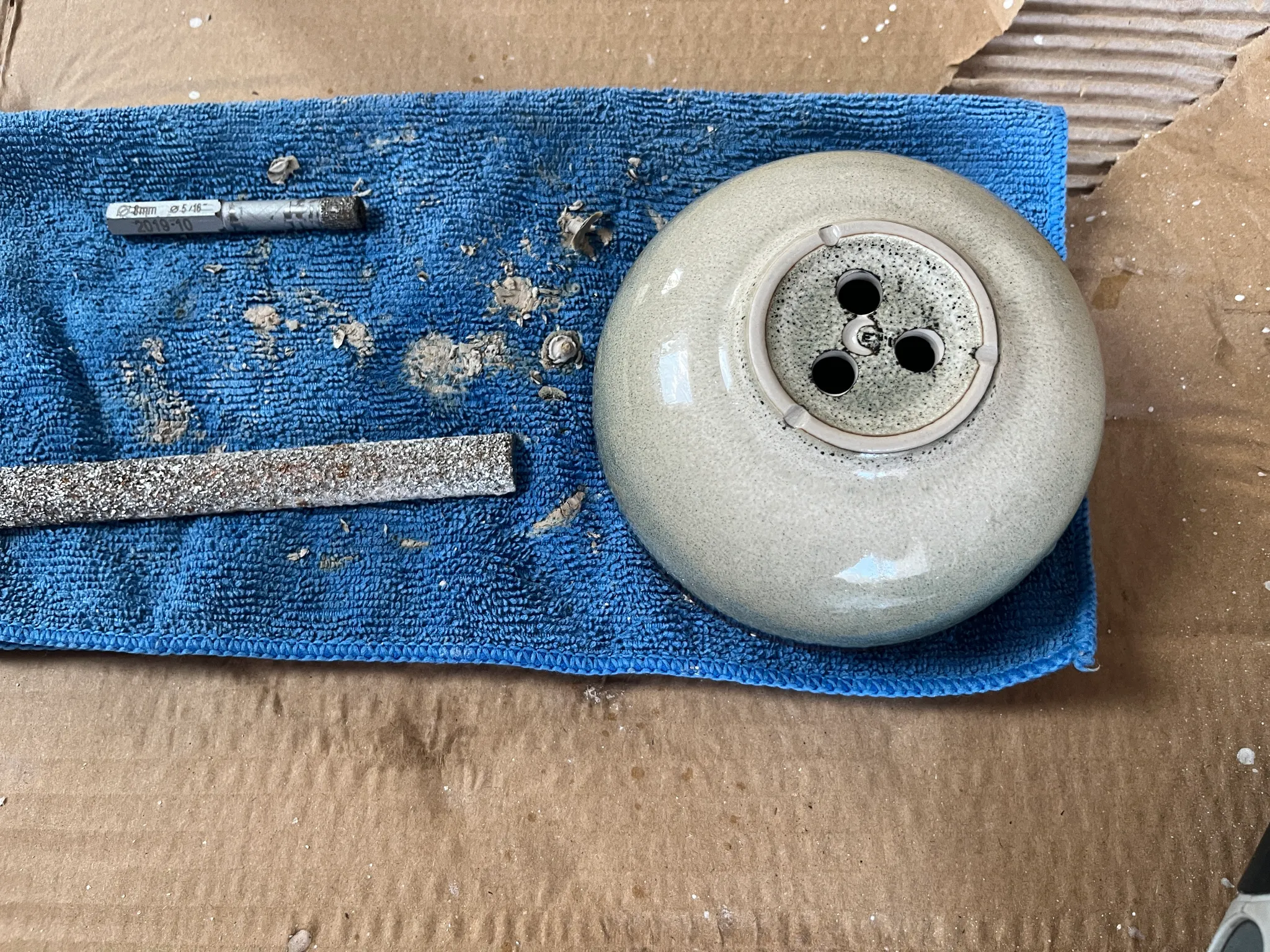
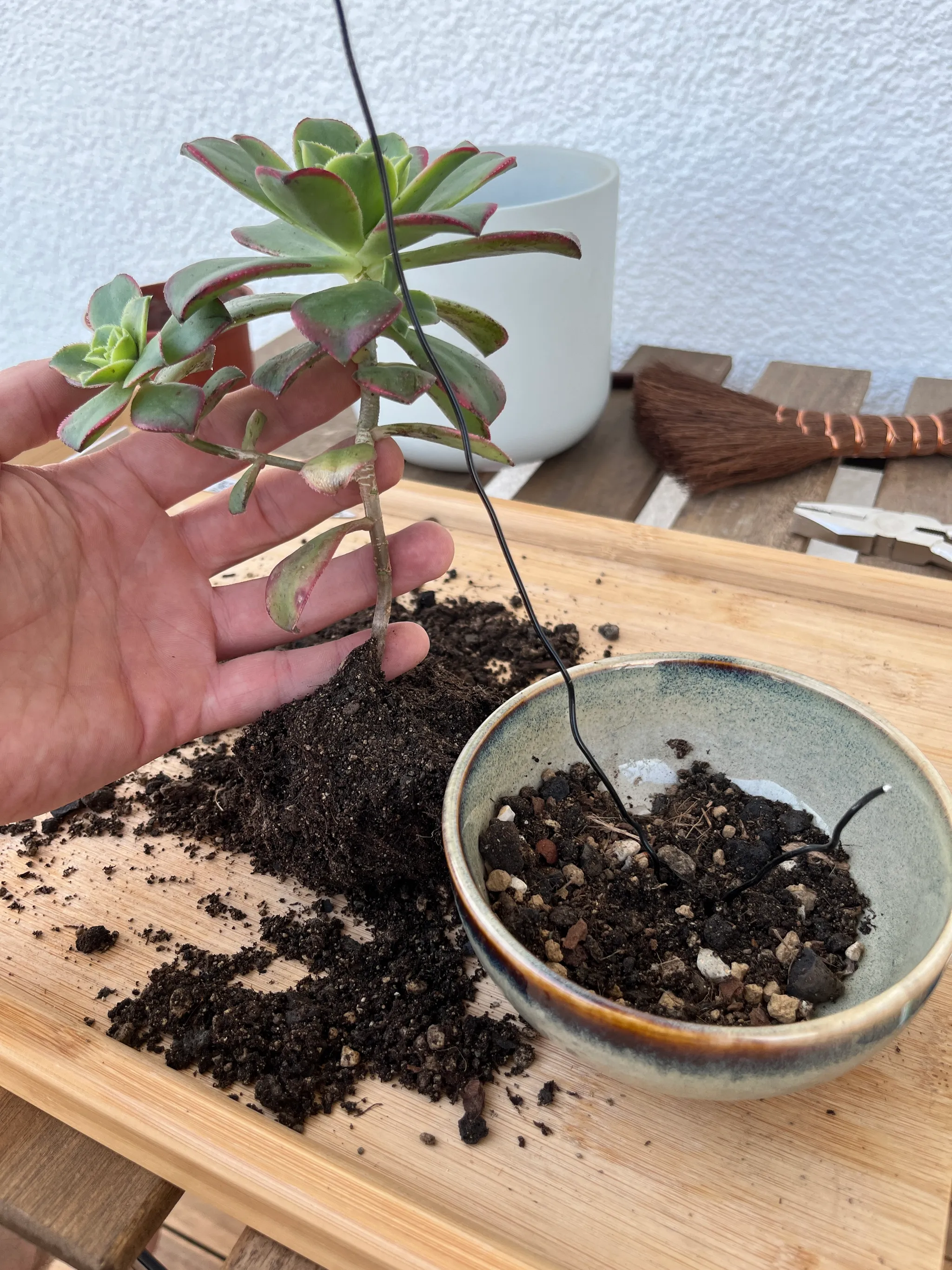
This an experiment, I really don’t know how this will turn out. I heared recently people promoting succulent growery in Erfurt in the east of Germany not very far from Leipzig. The nursery is called Kakteen haage and appears to be a very old company. In their logo they claim to grow succulents since 1685. That’s a very long time.
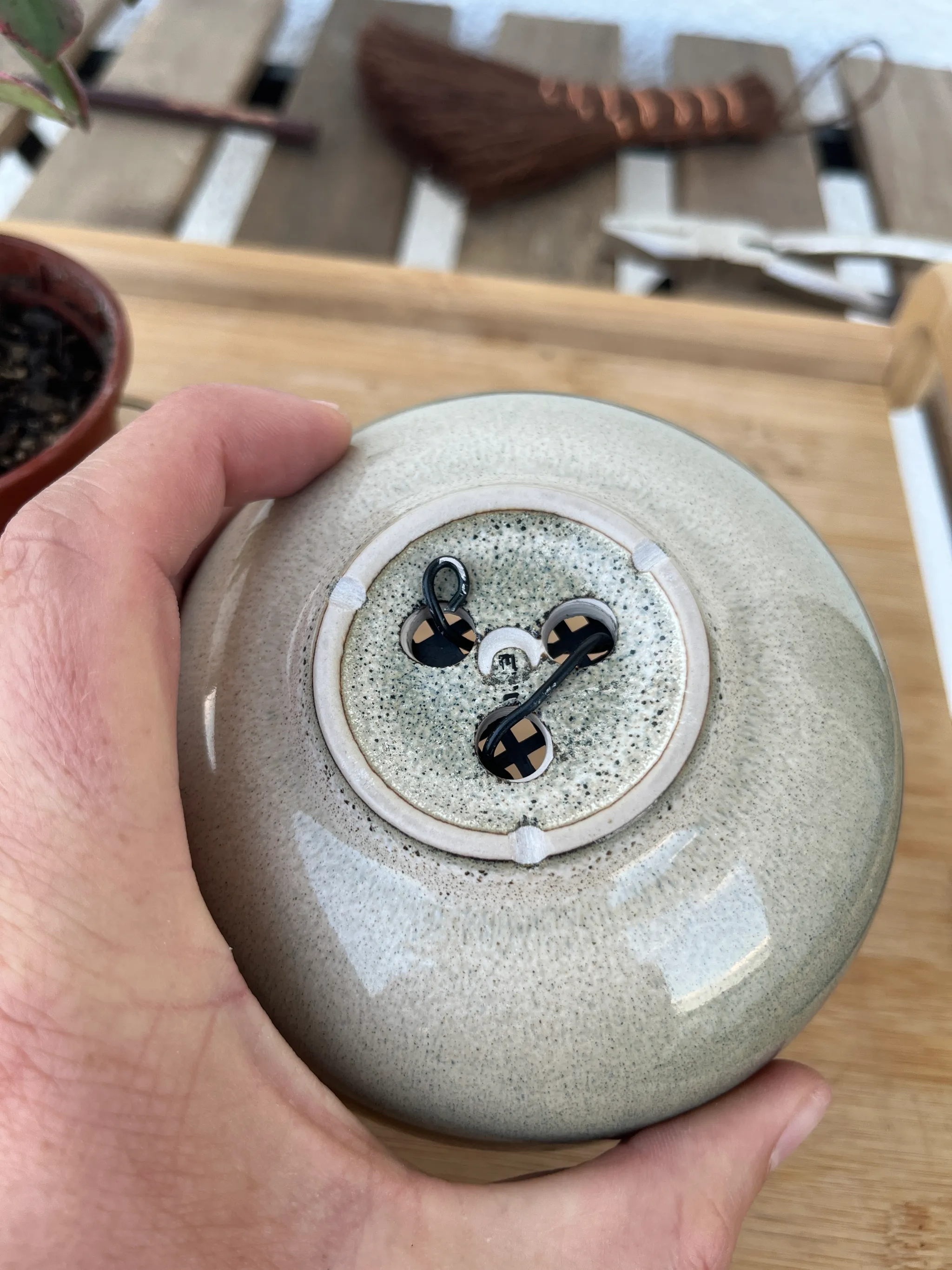
But anyways I looked through their catalogue and watched for succulents that grow stems. In the end everything that has a stem can be grown into a bonsai … or at least an intersting looking plant. I found the plant you see and used a small salad/food bowl as a pot. I drilled holes into it and filed joints into the bottom, so the water can exit. I’m a bit proud of my three-way mesh wiring at the access holes - it holds well and looks cool. Although I rarely see it from the bottom.
The wire I wante because the pot is so shallow that I need to secure the plant from falling out. Since the wire was on I event tried to bend it, but there is only little movement possible. I’m happy with a slanting succulent anyways.