 Living log
Bonsai Scots pine #1
Pinus sylvestrisWikipedia ↗NaturaDB ↗
- Type
- bonsai
- Acquired
- 2024-07-27
- Origin
- nursery
- Status
- alive
- Last pot
- Ø 21 cm · 12 cm deep (2026-02-28)
- Last soil
- pumice 10% · akadama 90% (2026-02-28)
- height
- 50 cm
- width
- 37 cm
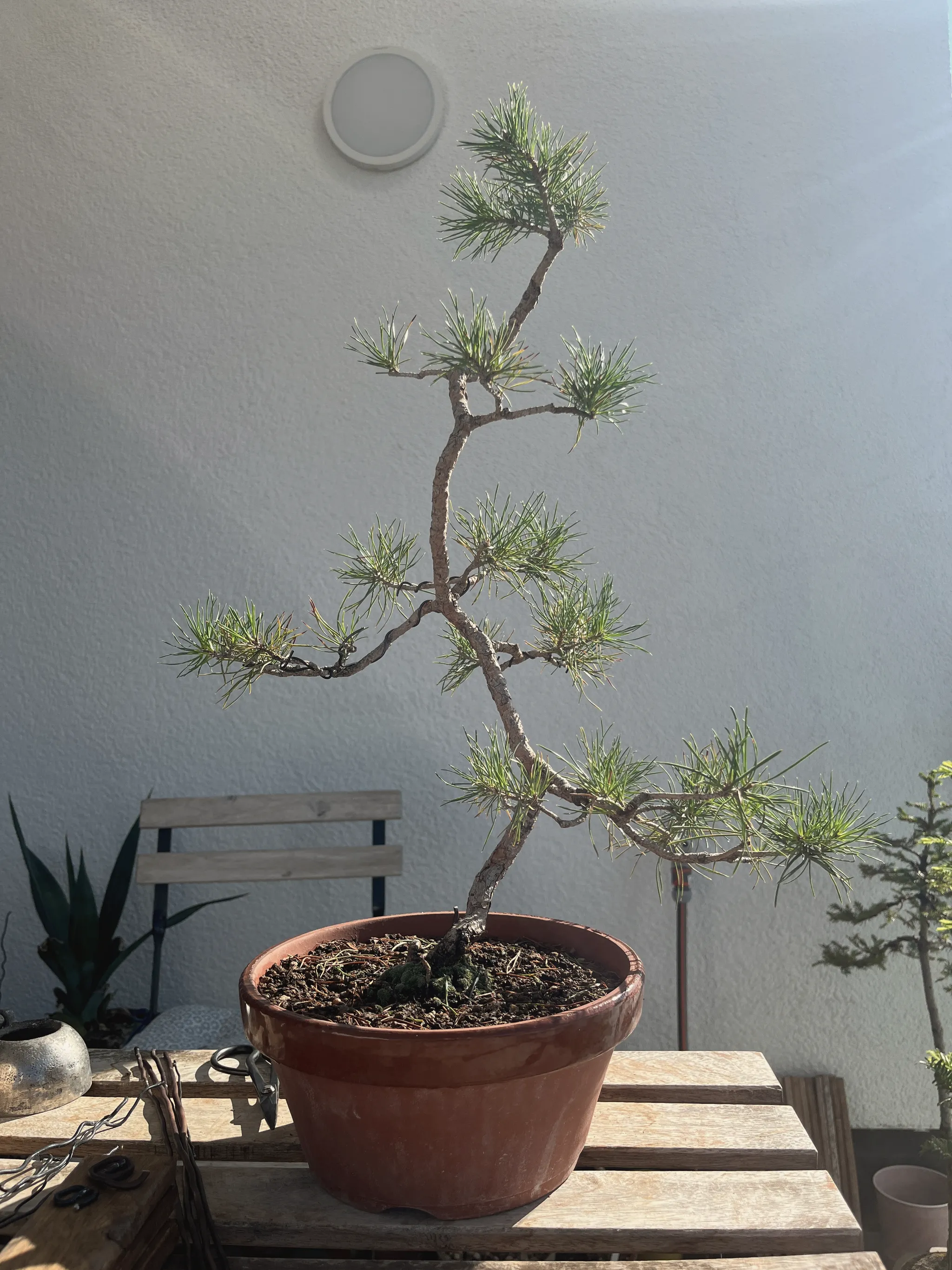
I realized middle of the summer might be a bad time to wire pines. In the summer they still grow and my enthusiasm of having found a “solution” to my pine problem was a bit to early. So I dewired it to be save and I’ll wire it instead in September/Oktober. To be honest I pan between leaving it alone for a few years and wiring it this year to make the shape set already.
- height
- 45 cm
- width
- 42 cm
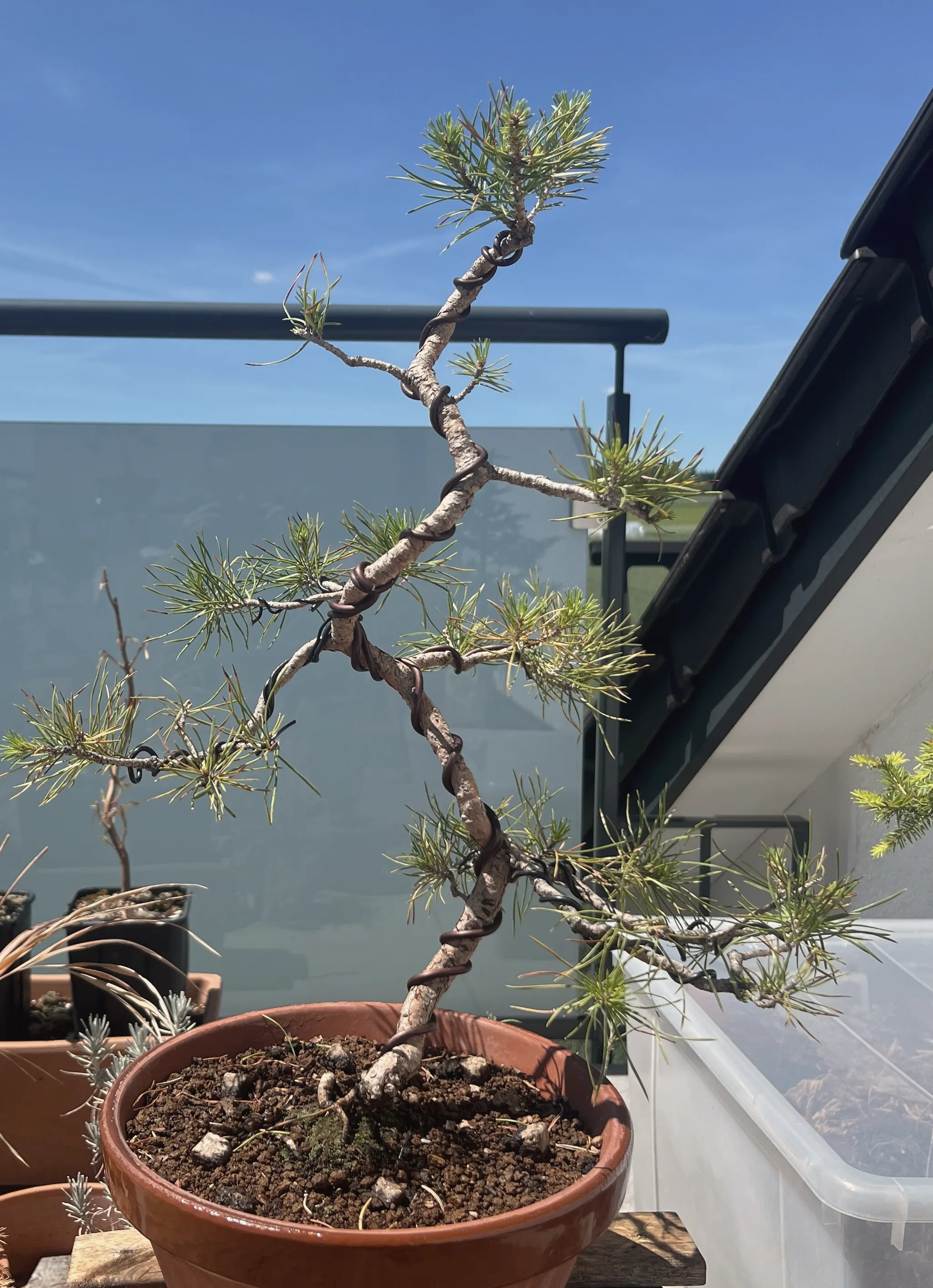
This tree bothered me so much I was looking at it for the last days - intensively. Since I obtained the tree I never had a real plan for it. So I wired it to get a feeling for how far I can go with scots pine. Turns out it is flexible without using raffia or such. although for protection this would have been a good idea.
Anyways, the tree is now far more compressed and the missing branches at the top aren’t such a huge problem anymore at the moment. Maybe it finally solves this riddle for me.
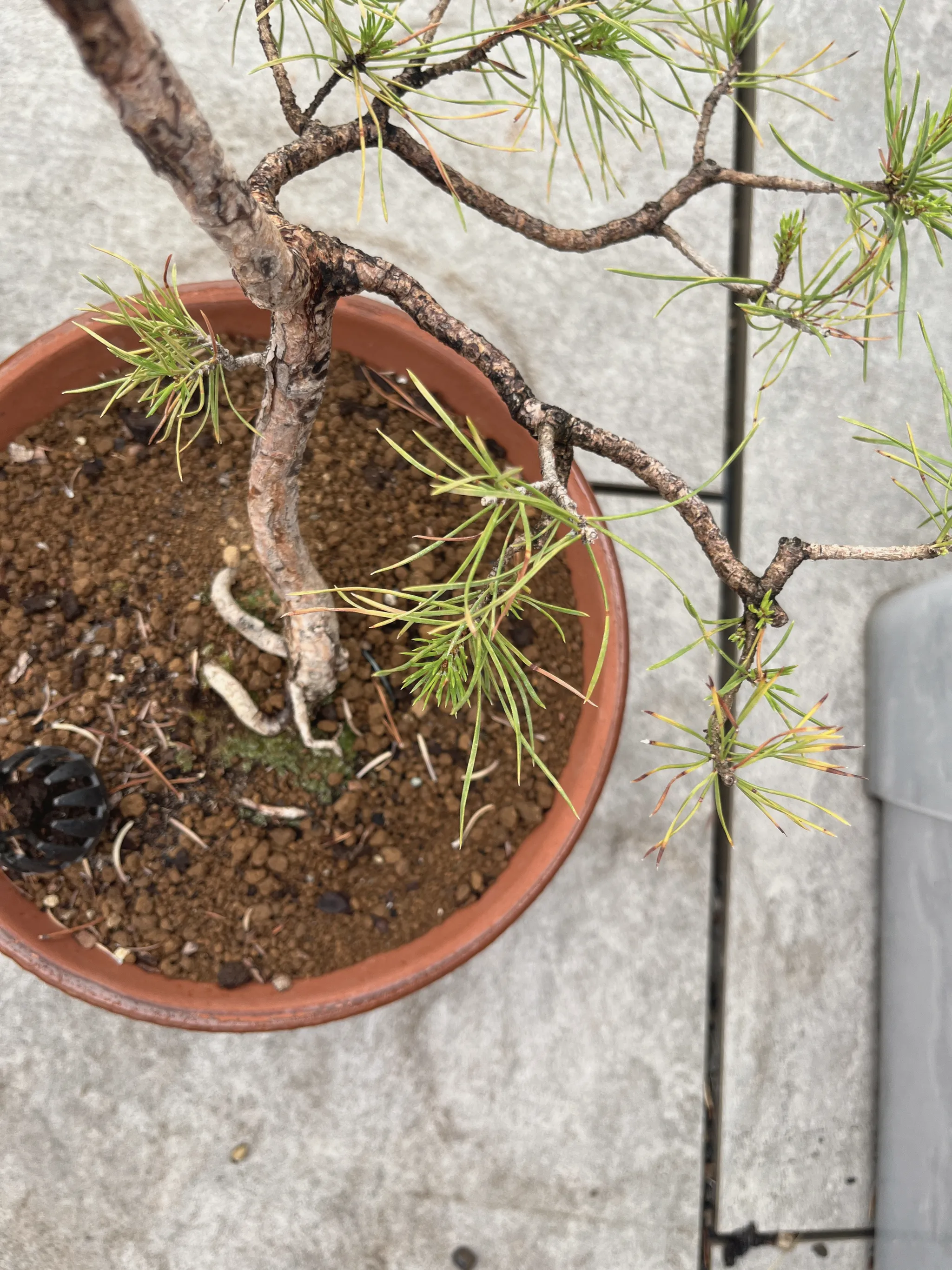
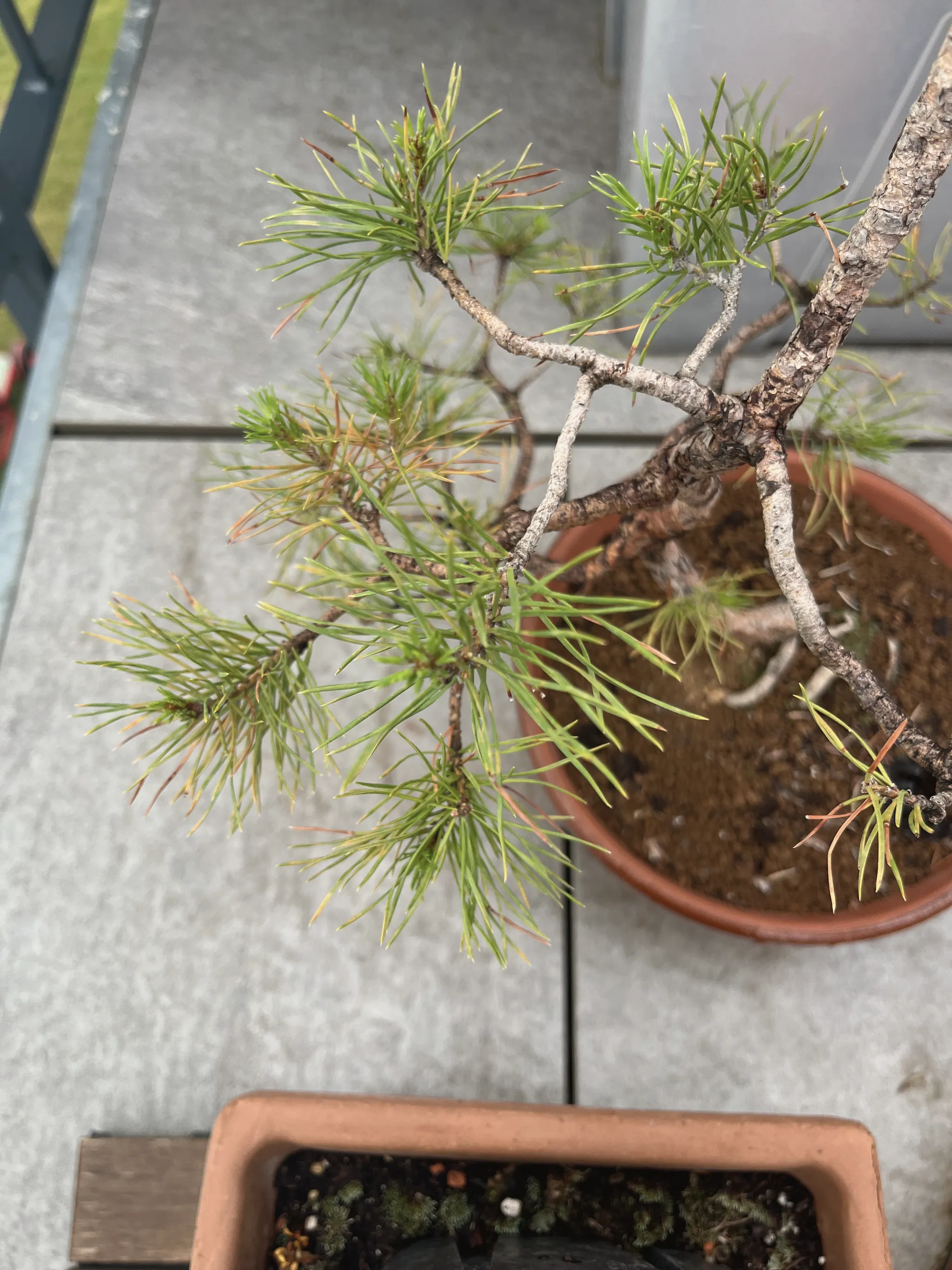
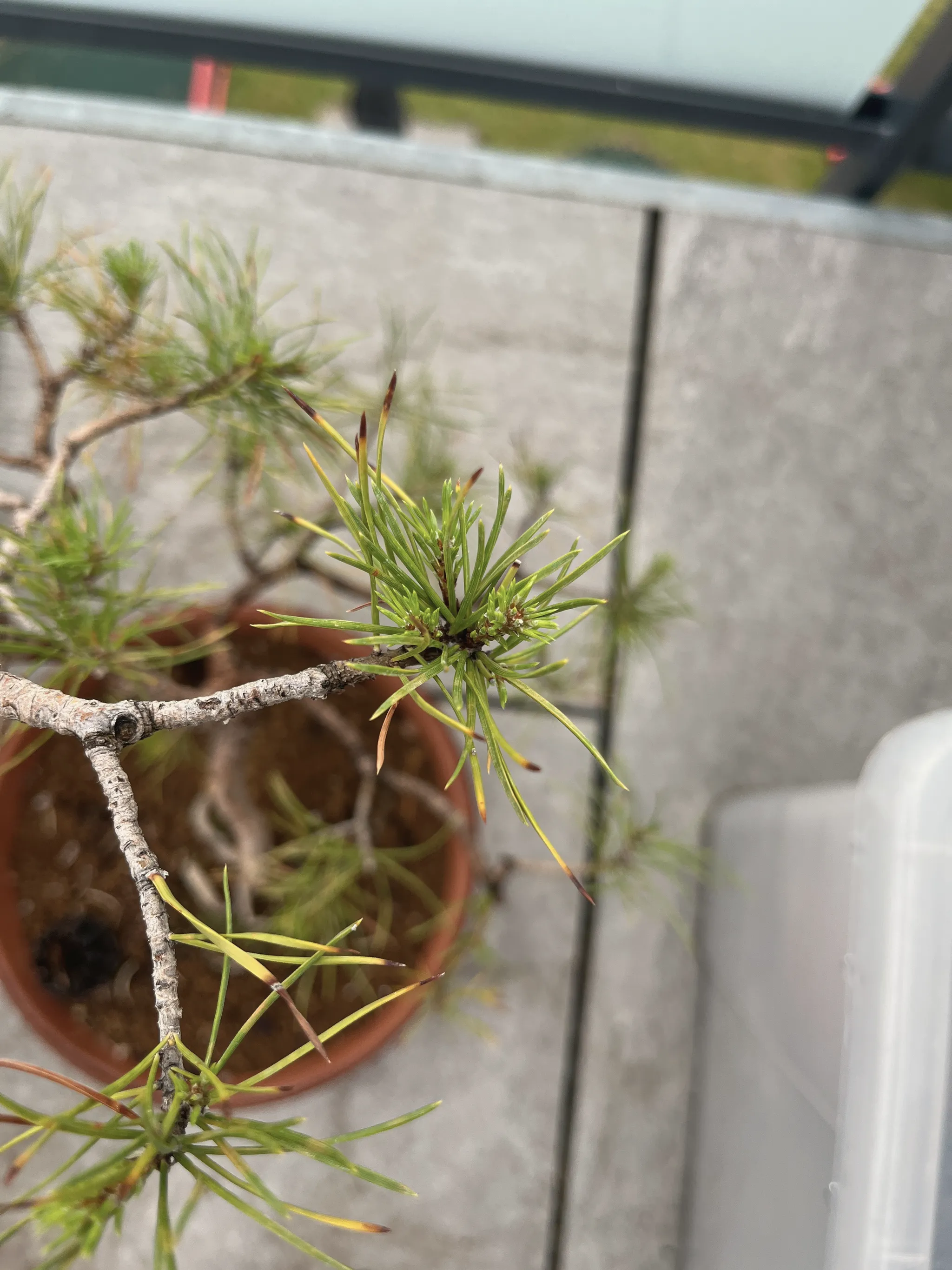
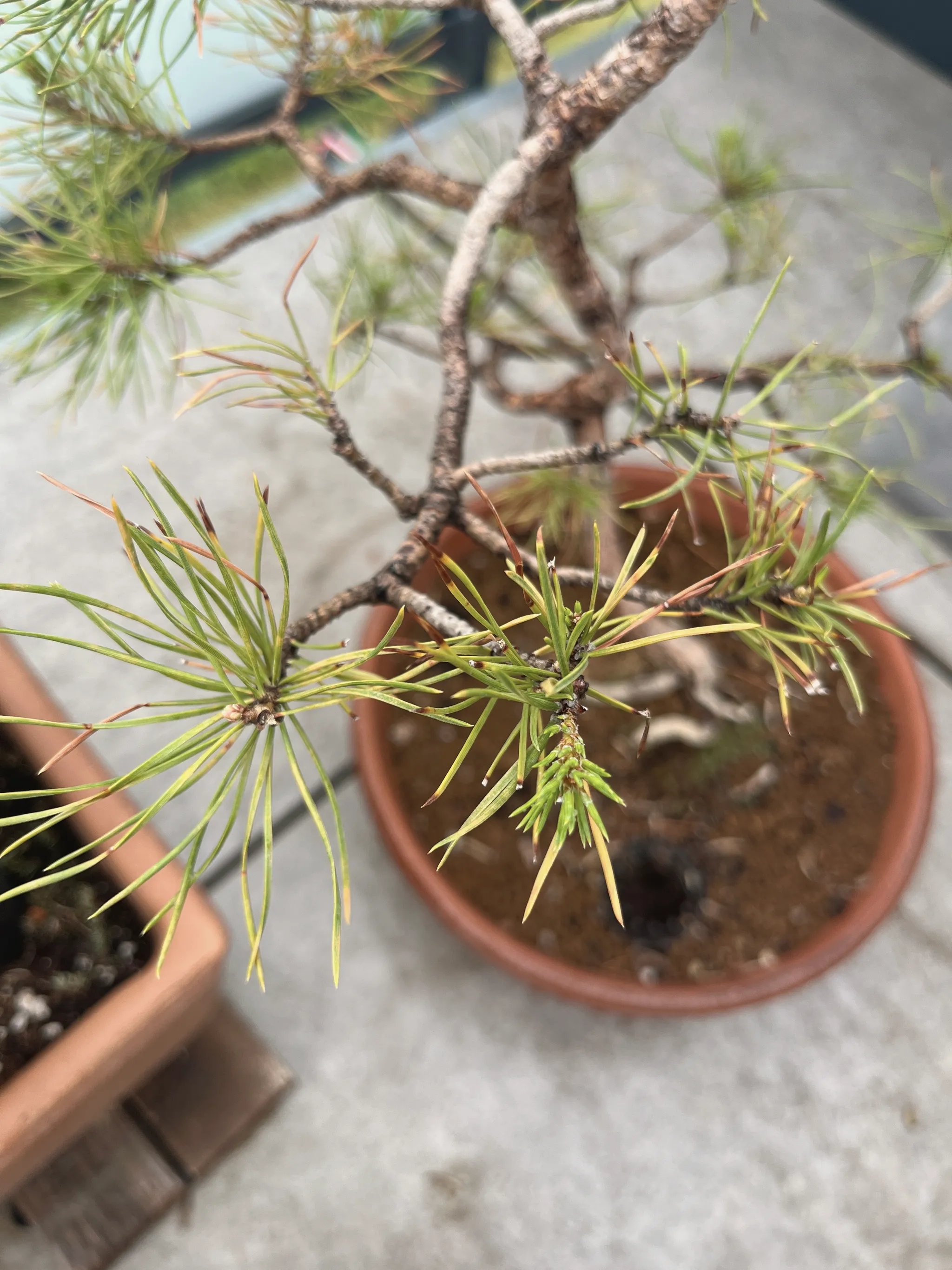
The summer is fine for the tree so far. I gave it a larger pot and it seems to work, or maybe it’s just me paying closer attention to the tree. In any case last years buds open up and the tree grows. But still, I am missing a good vision for this tree. Propably the best thing at this point is to wait and do nothing. The tree will one day tell me what I can make out of it.
- Pot
- Ø 21 cm · 12 cm deep
- Soil
- pumice 10% · akadama 90%
Gave the it a larger pot, so the tree hopefully recovers well this year. No root work, I think it just needs more space to grow. Also I’m a bit afraid of the upcoming summer. It’s getting warmer every year and this pine already had a hard summer in 2025, maybe with a bit more space it recovers well.
- Pot
- Ø 14 cm · 7 cm deep
- Soil
- organic 30% · akadama 70%
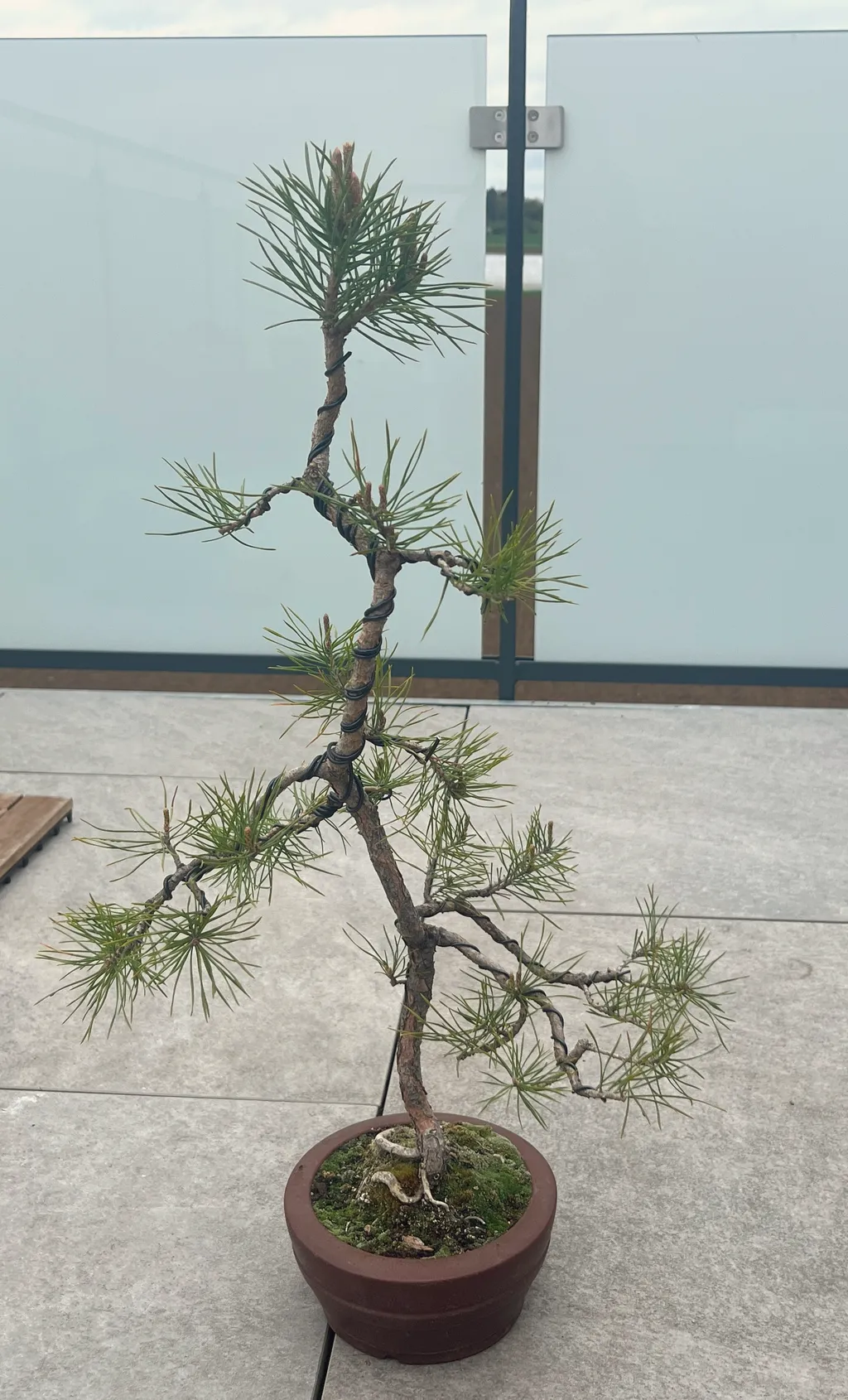
My confusion hasn’t lifted at all. I despritely wired some branches and cut the candles. But I’m so far from getting an idea about what to do with this tree. The branches now hang down but still not getting the feeling it is getting somewhere. The main problem is that it has no back branches so it always feel so bare. Also I’m not brave enough to cut the top off, although I think that may help it for better proportions.
But still all this struggle is actually fun for me. Writing this feels weird, but in some way this is an extremely hard puzzle for me so maybe one day I can solve it.
I was totally confused what to do with the tree. My impression is that there are to many faults for a literati style. A literati is a lenky mostly bare style of tree. Pines and Junipers are often used for this style. Anyways I decided not to do much an watch the tree. I’ve cut the very end of every branch, maybe it starts to develop sub-branches and ramify a bit. But my struggle at this point is real. In the end I’m a beginner so I want tot believe that this is normal.
- height
- 43 cm
- width
- 28 cm
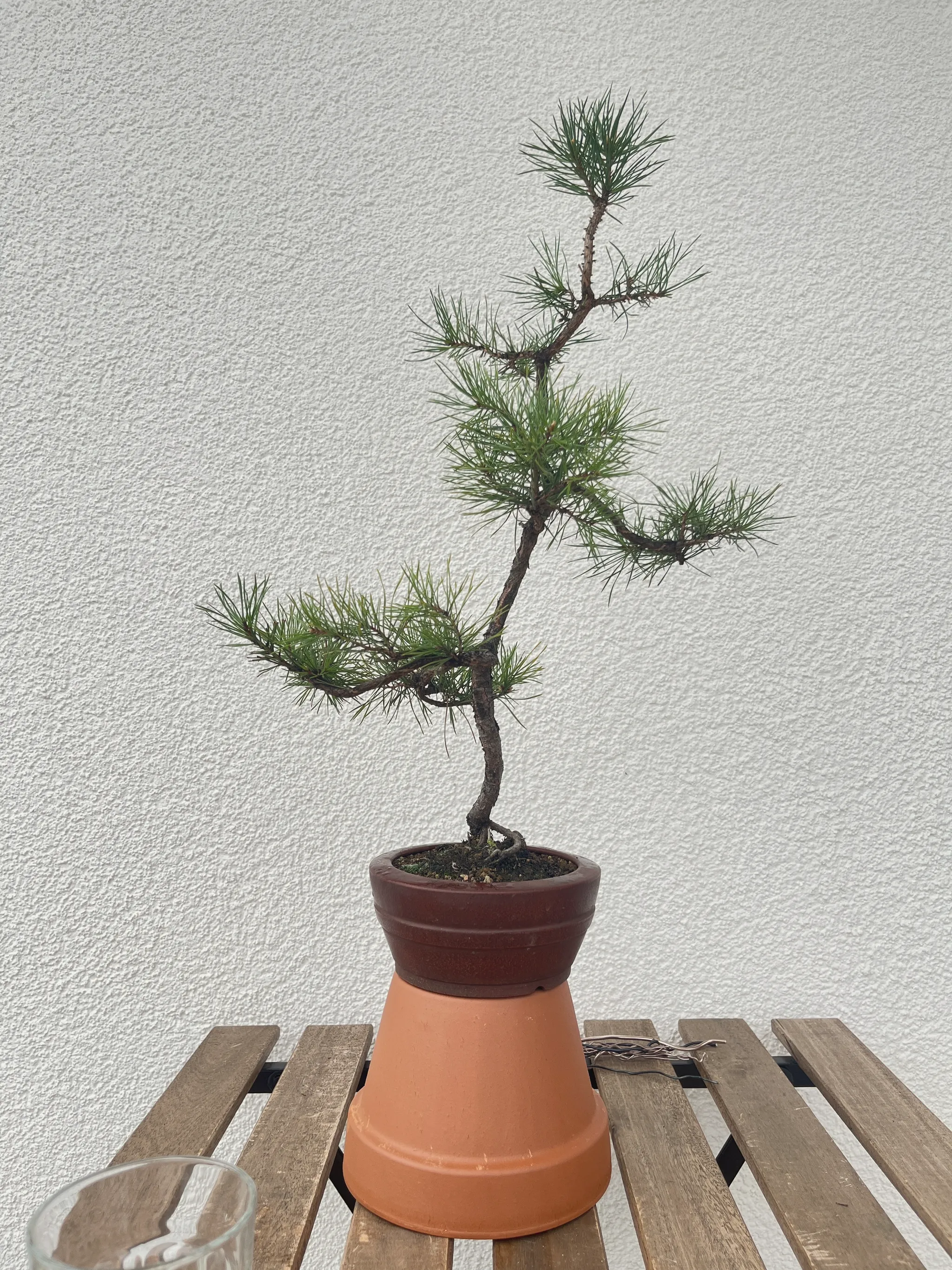
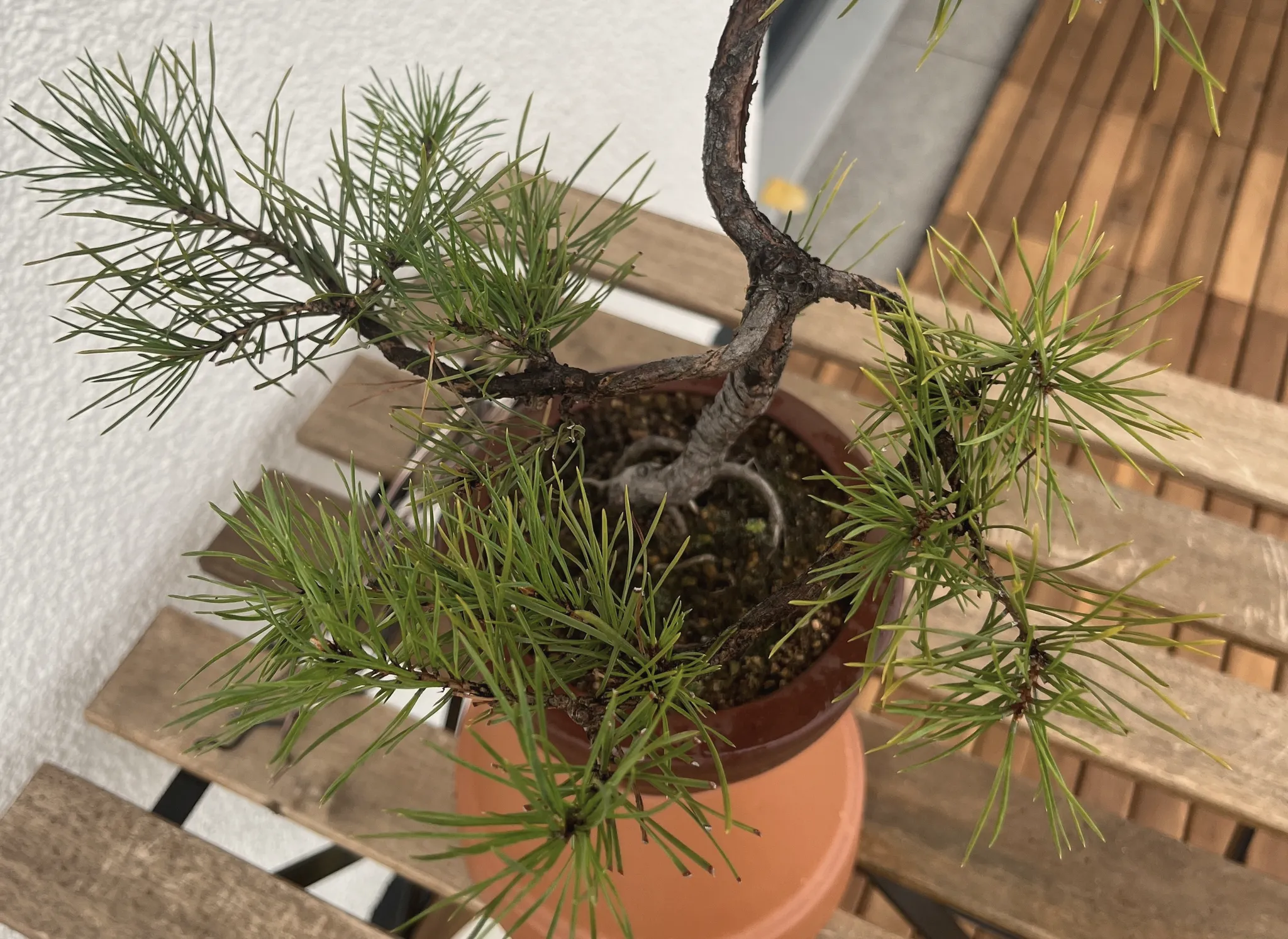
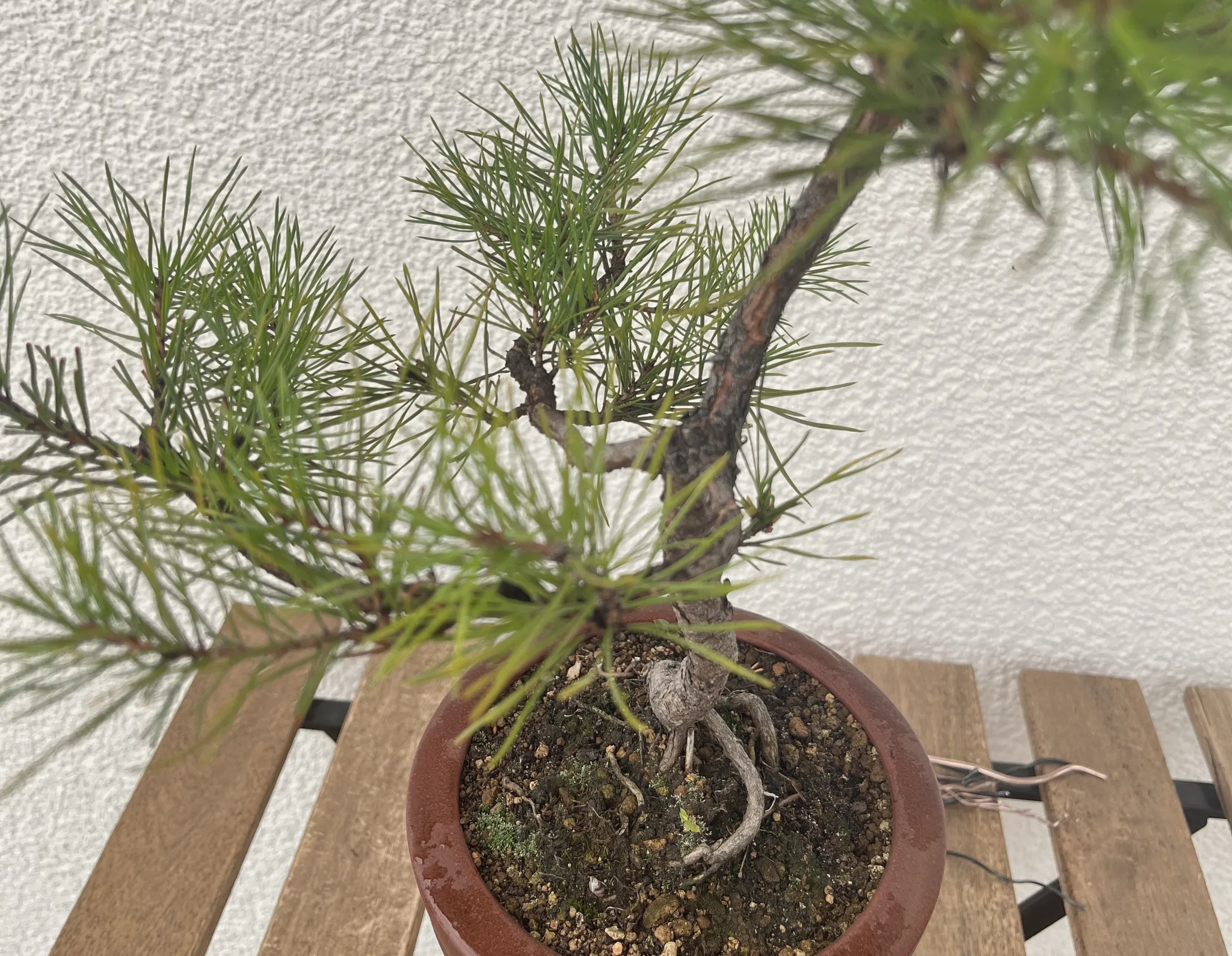
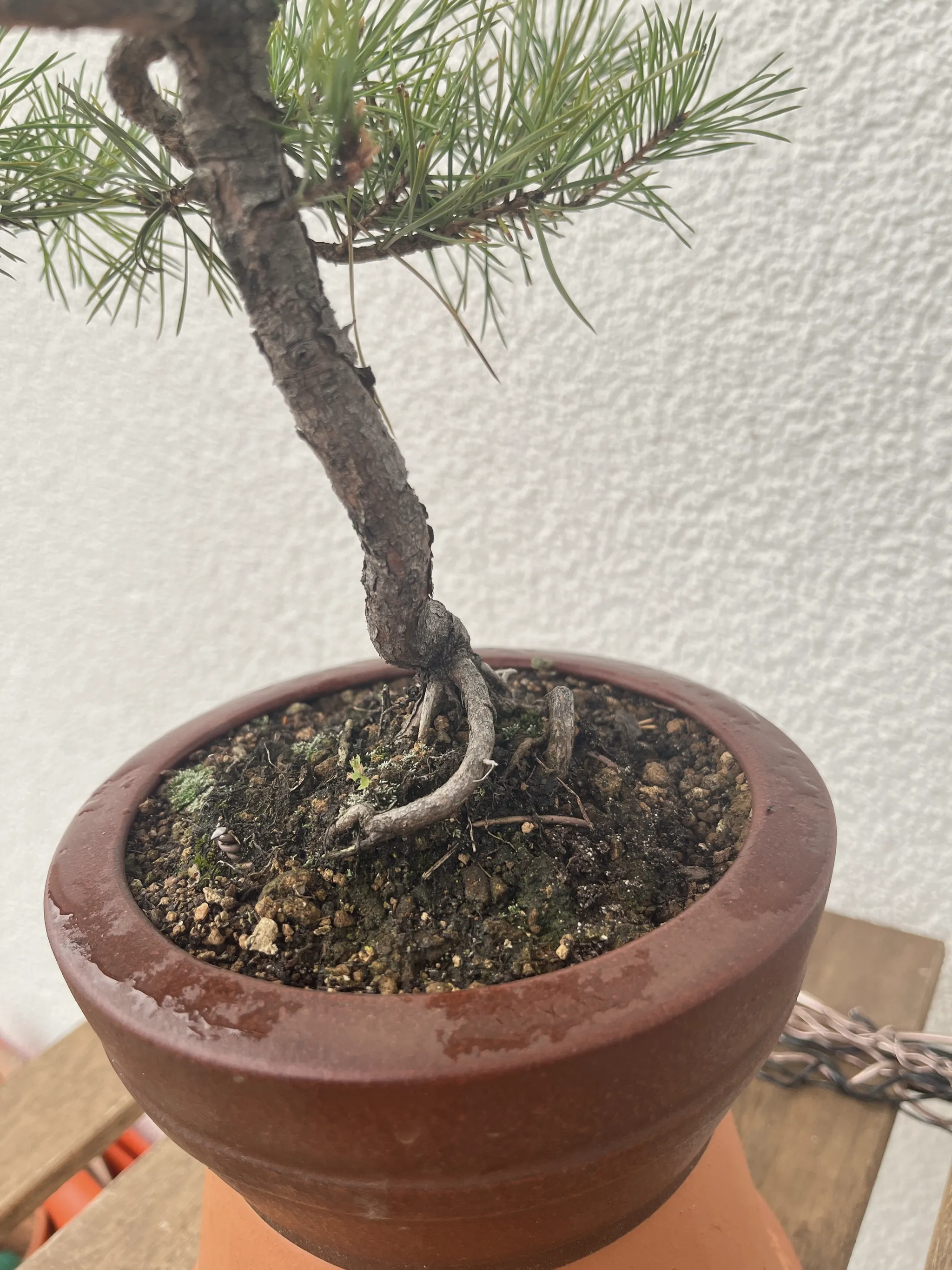
This long scots pine I bought at a local bonsai nursery, it’s lead by an elderly pair and they created a wonderful place with all the plants and animals (turles and birds). I’ve interviewed one of the owners and he told me that scots pine is a fairly easy bonsai to handle - basic. So I bought the one you see on the images and I just love to look at it and think why did he cut there or why did he pull the branches around like that. I noticed that with a bit of time and carefull inspection you can spot the individual style of a bonsai person. At least here it’s the case - so I imagine it would be the same for others too. I bought it because I liked the roots and the lenky style of it. It’s not a literati I think, but it leans towards one.
I plan to do nothing to the tree except cutting pruning and let it develop. I hope I can limit myself to this plan because sometimes looking at it I get the impression that compressing it by bending it round would also make a nice tree. Luckily I don’t have 3 or 3.5mm wire so I’d need to double wire around.
Background
This long scots pine I bought at a local bonsai nursery, it’s lead by an elderly pair and they created a wonderful place with all the plants and animals (turles and birds). I’ve interviewed one of the owners and he told me that scots pine is a fairly easy bonsai to handle - basic. So I bought one and I just love to look at it and think why did he cut there or why did he pull the branches around like that. I noticed that with a bit of time and carefull inspection you can spot the individual style of a bonsai person. At least here it’s the case - so I imagine it would be the same for others too. I bought it because I liked the roots and the lenky style of it. It’s not a literati I think, but it could be one - oneday.