 Living log
A money plant that grew from a statue
Pachira aquatica
- Type
- houseplant
- Acquired
- 2026-05-05
- Origin
- gift
- Status
- alive
- Last soil
- organic 100% (2026-08-05)
- height
- 43 cm
- width
- 32 cm
- Soil
- organic 100%
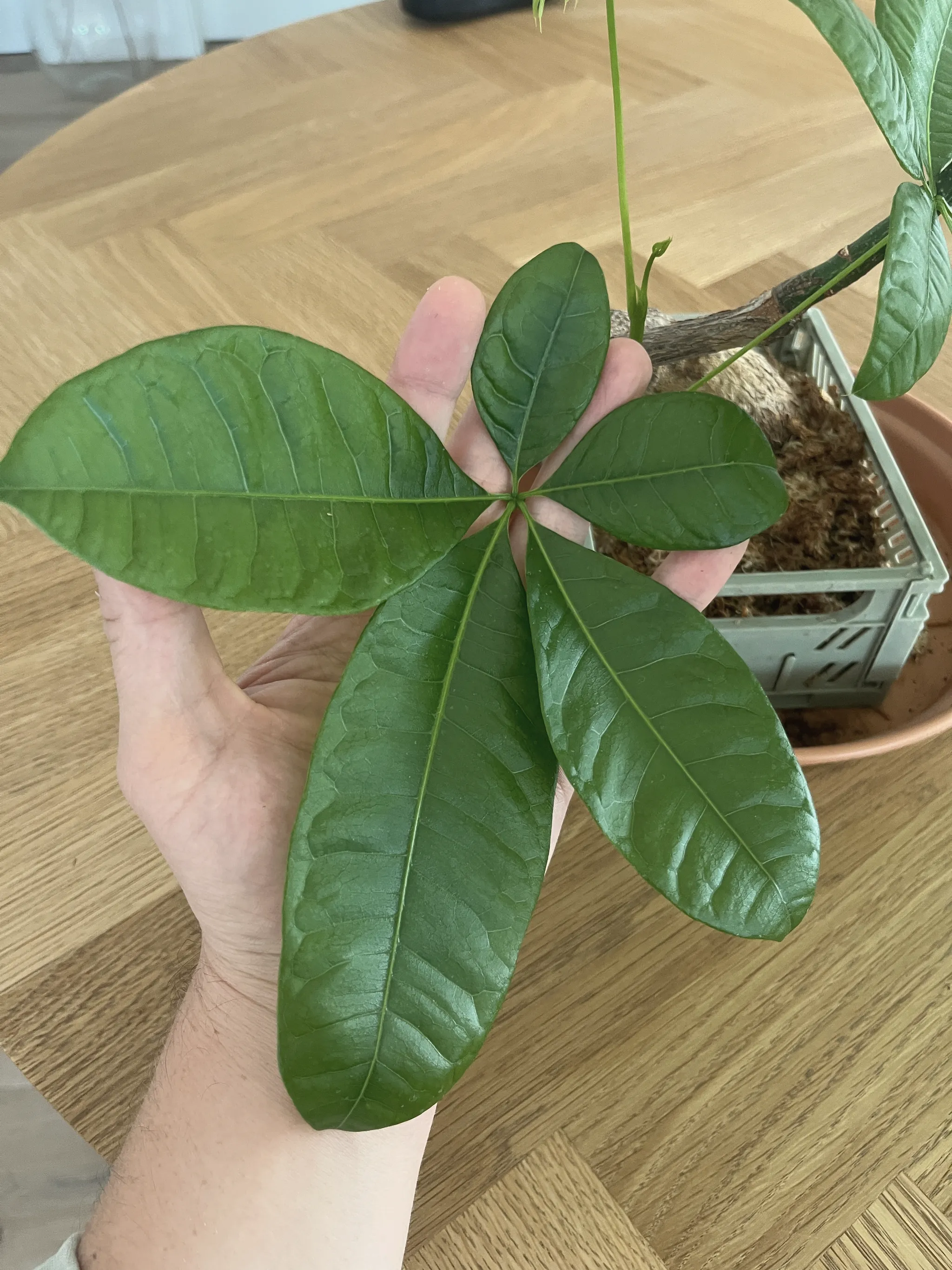
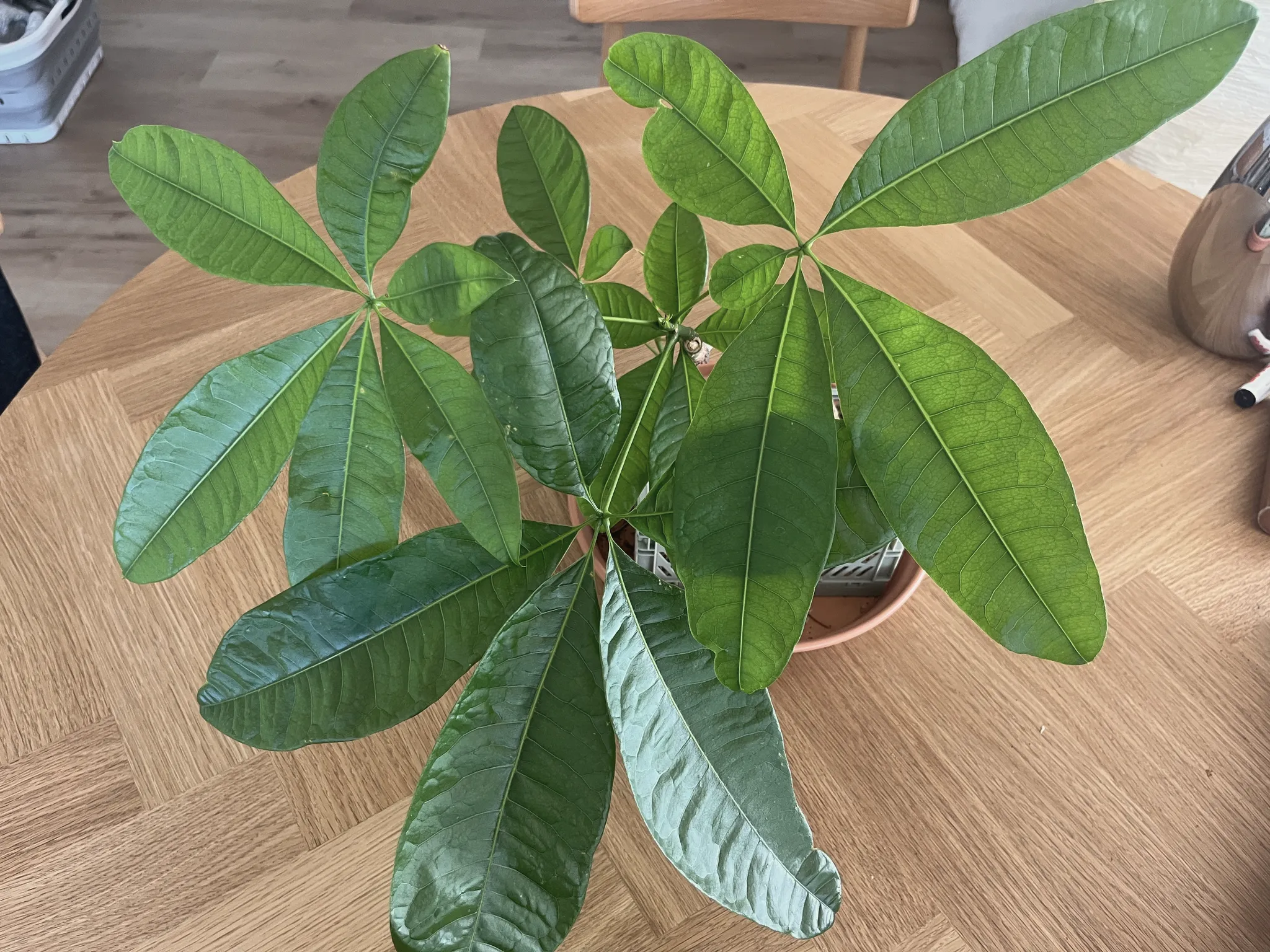
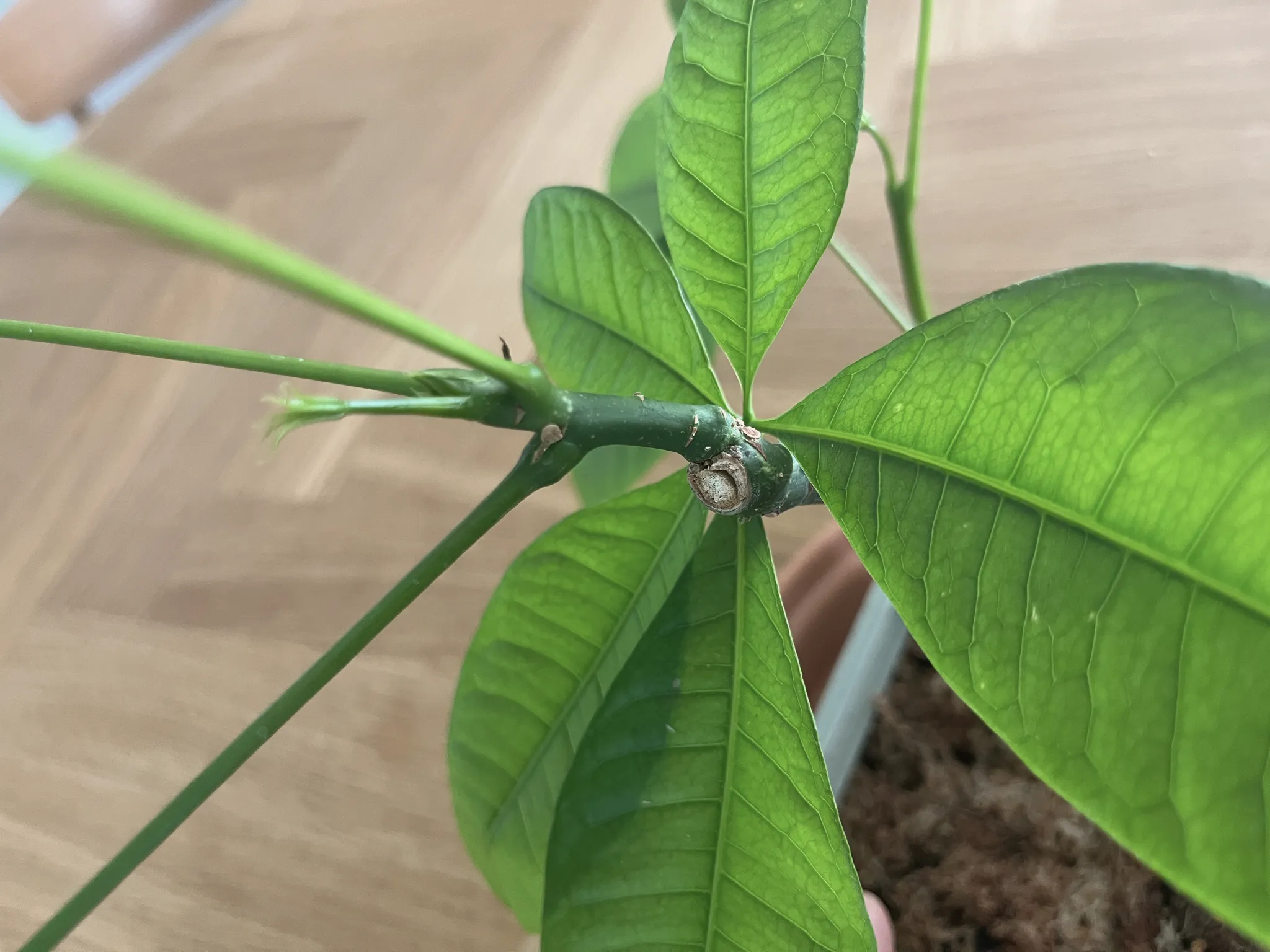
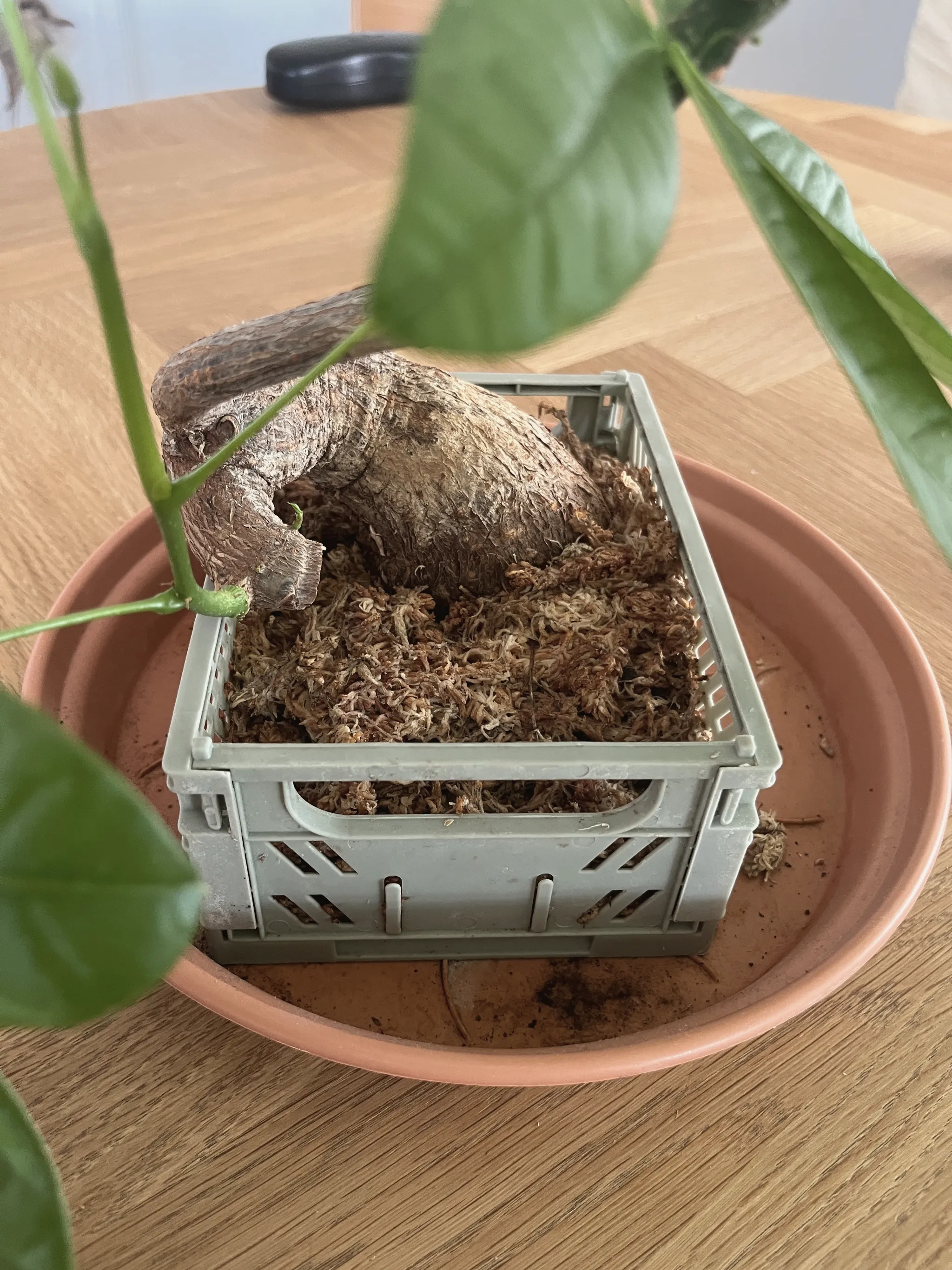
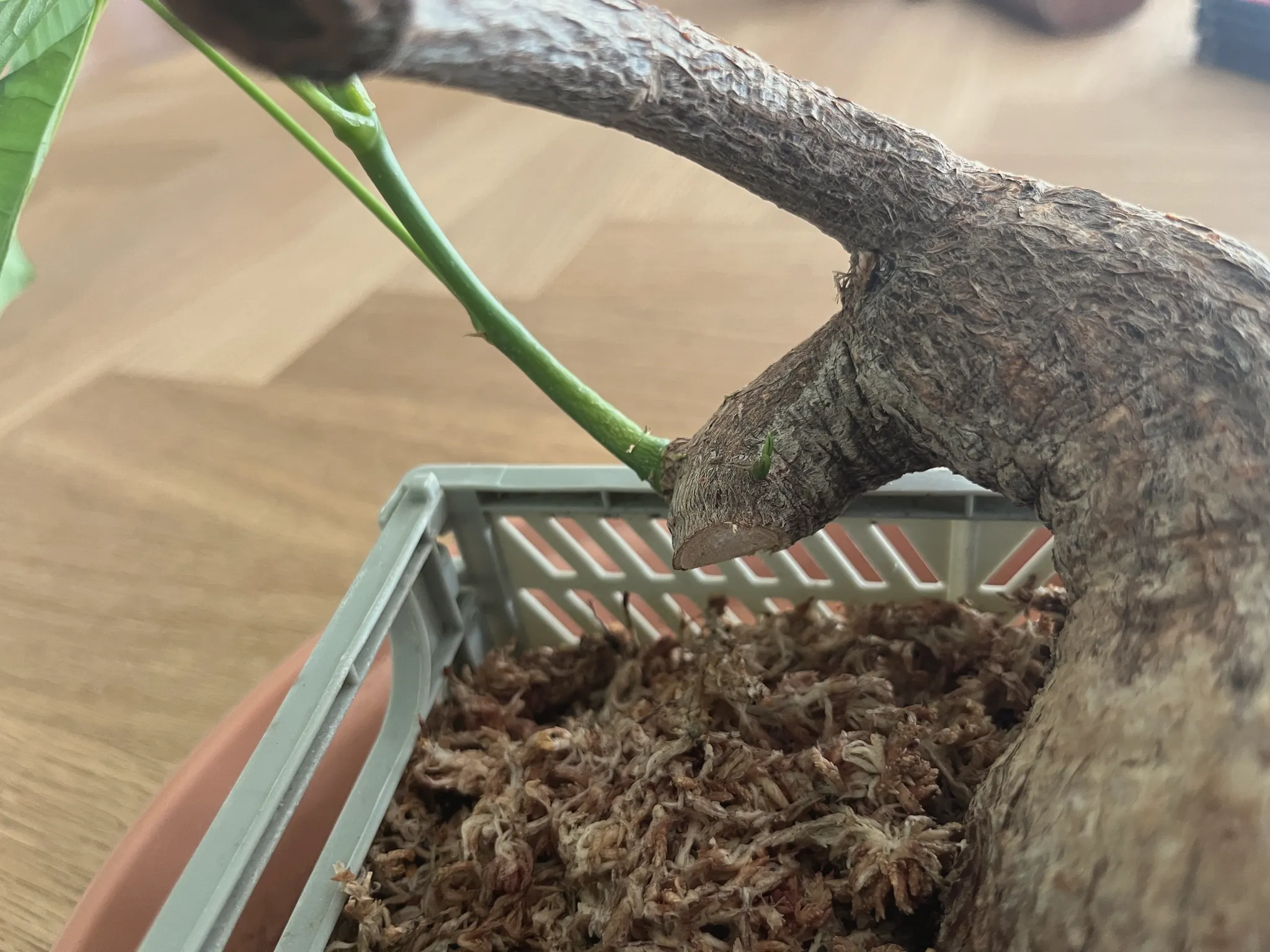
Exactly three months later this plant has actually rooted in the glas and I meanwhile (around a two month later) transfered it into an airy basket filled with sphagnum moss. This substrate holds plenty of water and provides oxygen at the same time. People in the bonsai world use it to rescue plants that suffered in the root layers. It’s also used to propergate by air layering trees on nurseries. A real magical resource.
The images are taken at a time (5th of August) where the plant had around one month of contact with the spaghnum moss and the roots seem to have established well, since it grows huge leaves that are larger than my hand. Also super nice, that it back buds from the heavy cuts I made and produces new shoots. I will fertilize it one time now and leave it for a bit more, before I try to move it into a new container.
- height
- 12 cm
- width
- 14 cm
Yesterday on 5th of May I freed up the money tree and left it outside to breath a bit of fresh air and after a while I looked for it and I was shocked. While I was inside for an hour or so, a bit of wind occurede and blew over the weakend part.
It snapped exactly at this junction where the plant used to exit the statue at the back of the head. I maintain this plant for quite a while now so that was somewhat dramtic for me. I took bulbous part of the stem and put it in glas of water. I think this is how Pachira aquatica is propergated.
- Soil
- organic 70% · pumice 30%
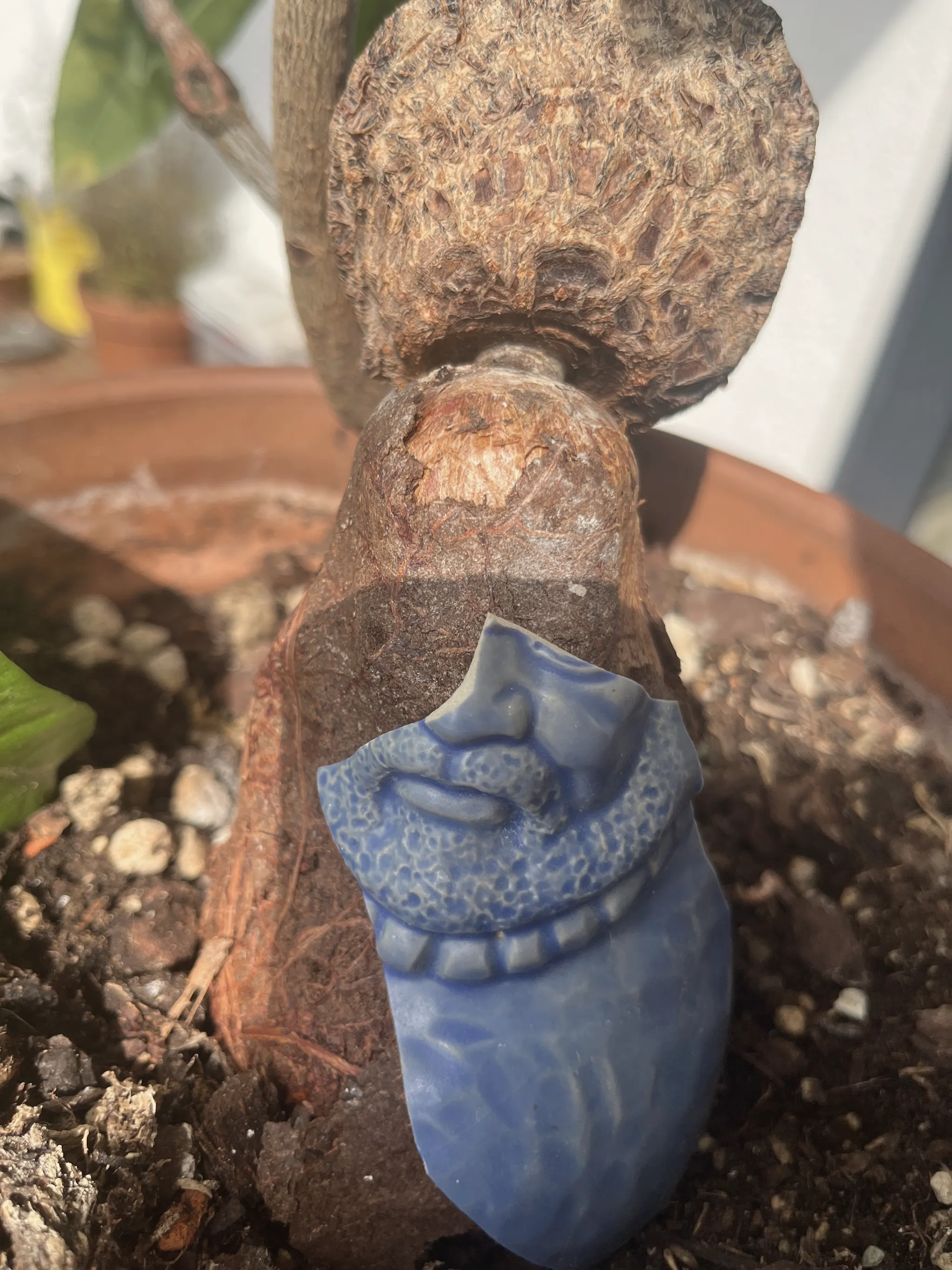
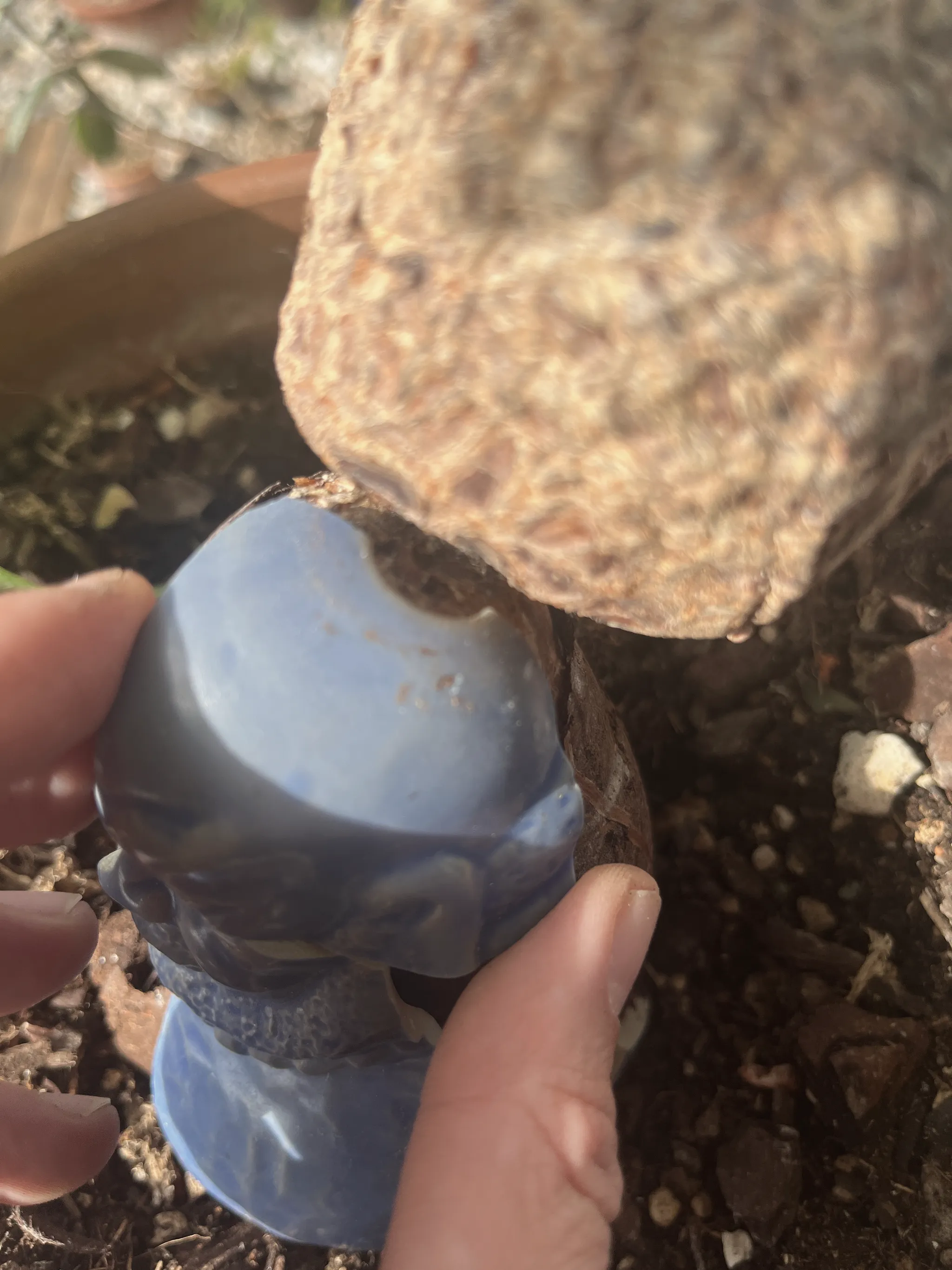
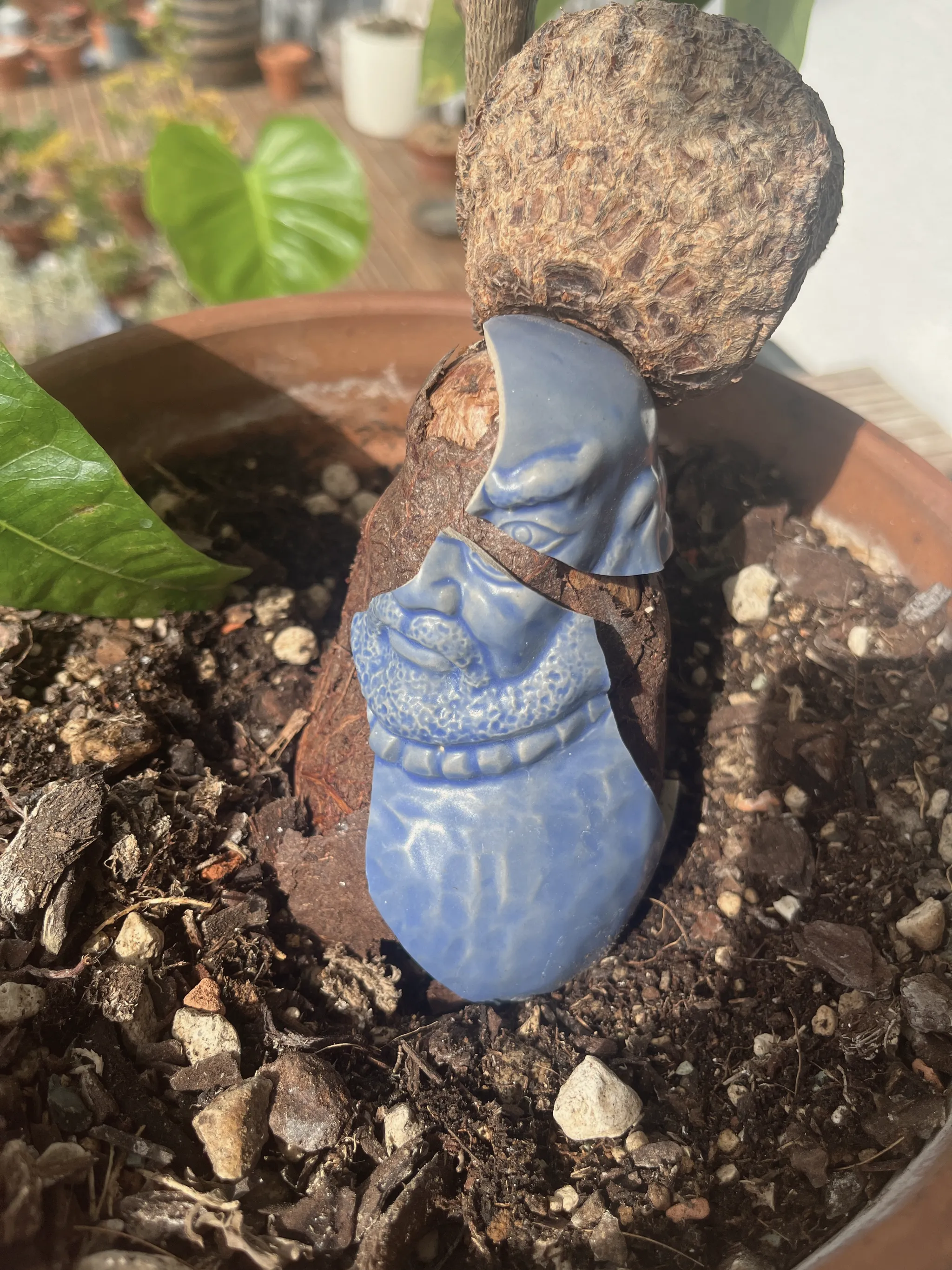
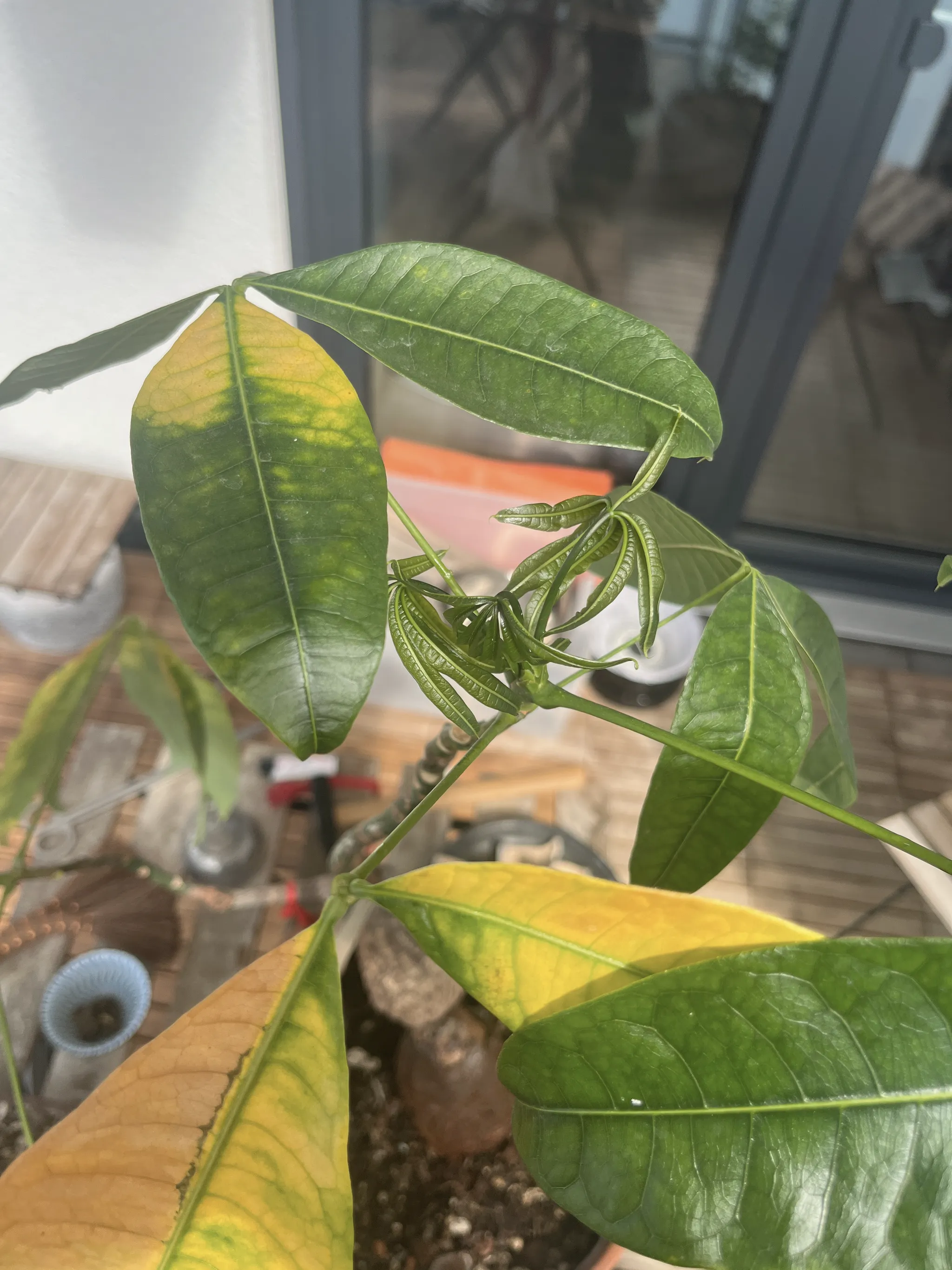
During the whole of spring so far I noticed that this plant doesn’t grow anymore. I suspect that the joint where the plant grows through the hole is to small and the plants layers that transport nutrients and moisture to the leaves simply doesn’t have enough space. That could explain leave yellowing and that the new shoots don’t grow and stay small.
So I decided to smash the statue and free the plant. Said and done, I kept the the shards. Maybe there is something that can be done with it. The basic idea is still to free up the plant, so it can develop a thick enough layer to transport water and nutrients top to bottom. My main suspicion is that this currently kills this money tree, also because I read it a few times - braided money tree as we buy them in garden centres often strangle each other.
- height
- 94 cm
- width
- 69 cm
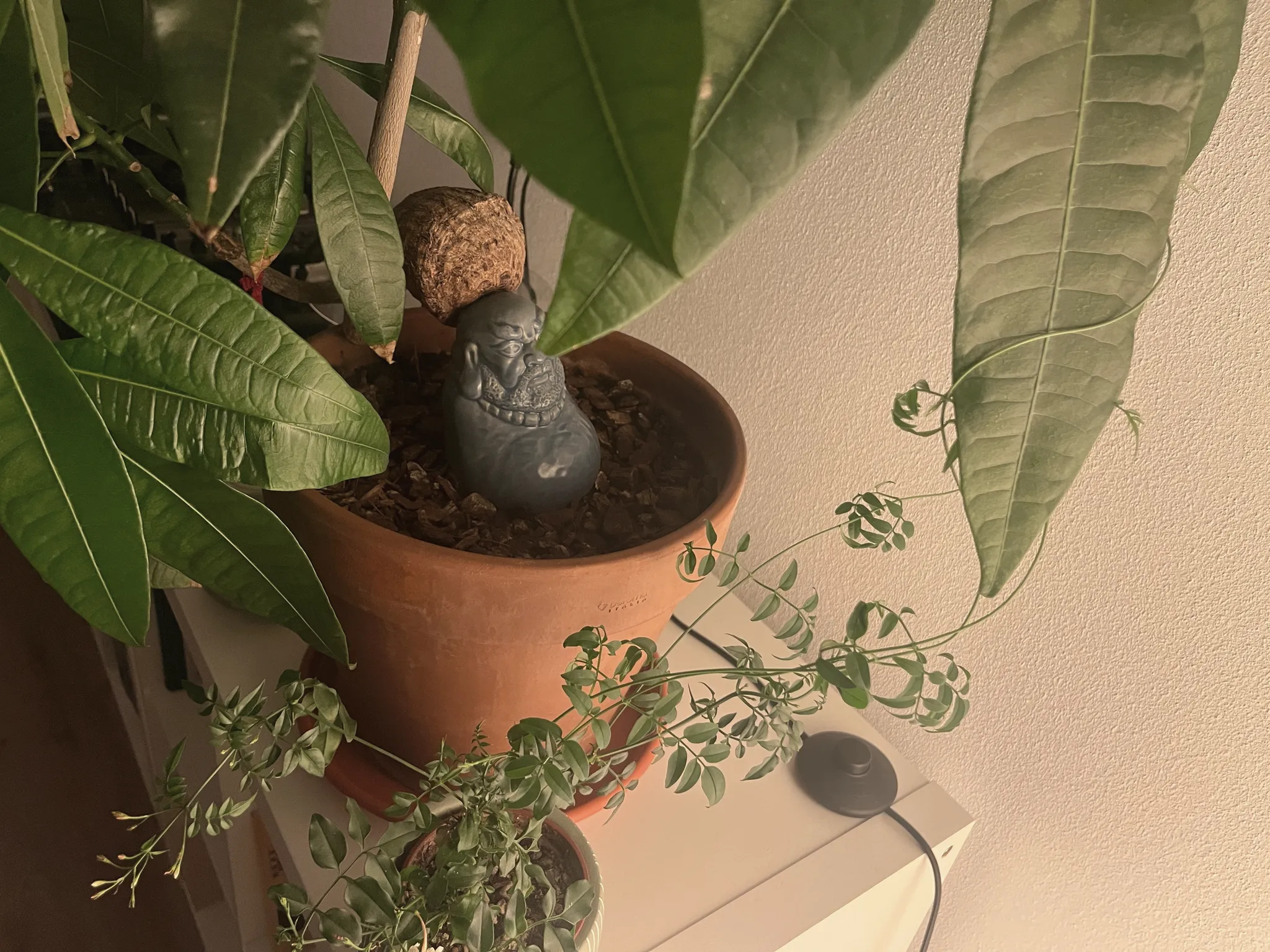
Background
The plant was gifted to me by my stepmother some day around 2020. She used to work in a garden centre and had access to tons of plants every day. On a visit she giften me this plant (also called malabar chestnut). It was very long and growing with a thick stem from the backside of a buda-like blue statue. The plant grew out of a hole at the back of the statues head, such that it looked as if the plant is the hair of the statue. At first it didn’t really do well in my place. Smaller pests and my inability to water it properly caused some leaves to drop. After pruning and looking up how to care for this plant I realised it’s ok to let the soil dry out and water it throughly again.