 Living log
Sphagnum moss to the rescue
started 2024-10-02·tended 2026-08-05
Referenced
Sphagnum moss helps damaged trees to produce new roots, this should also be possible for other plants. For example I saw people propergating hoya cuttings using sphagnum moss. Air-layering is a common technique to propergate from trees by cutting a thin layer open at the stem all around and putting moist sphagnum moss on top of it. The whole thing is sealed with a plastic bag, so the tree grows root in the moss ball. With enough roots the branch can be cut of below and you have a new plant.
So Sphagnum moss seems to be a root promoter, so it might also be a good idea to use it in the soil to prevent plants from drying out to fast in the increasingly warmer summers. You know … climate change.
How this developed
- height
- 43 cm
- width
- 32 cm
- Soil
- organic 100%
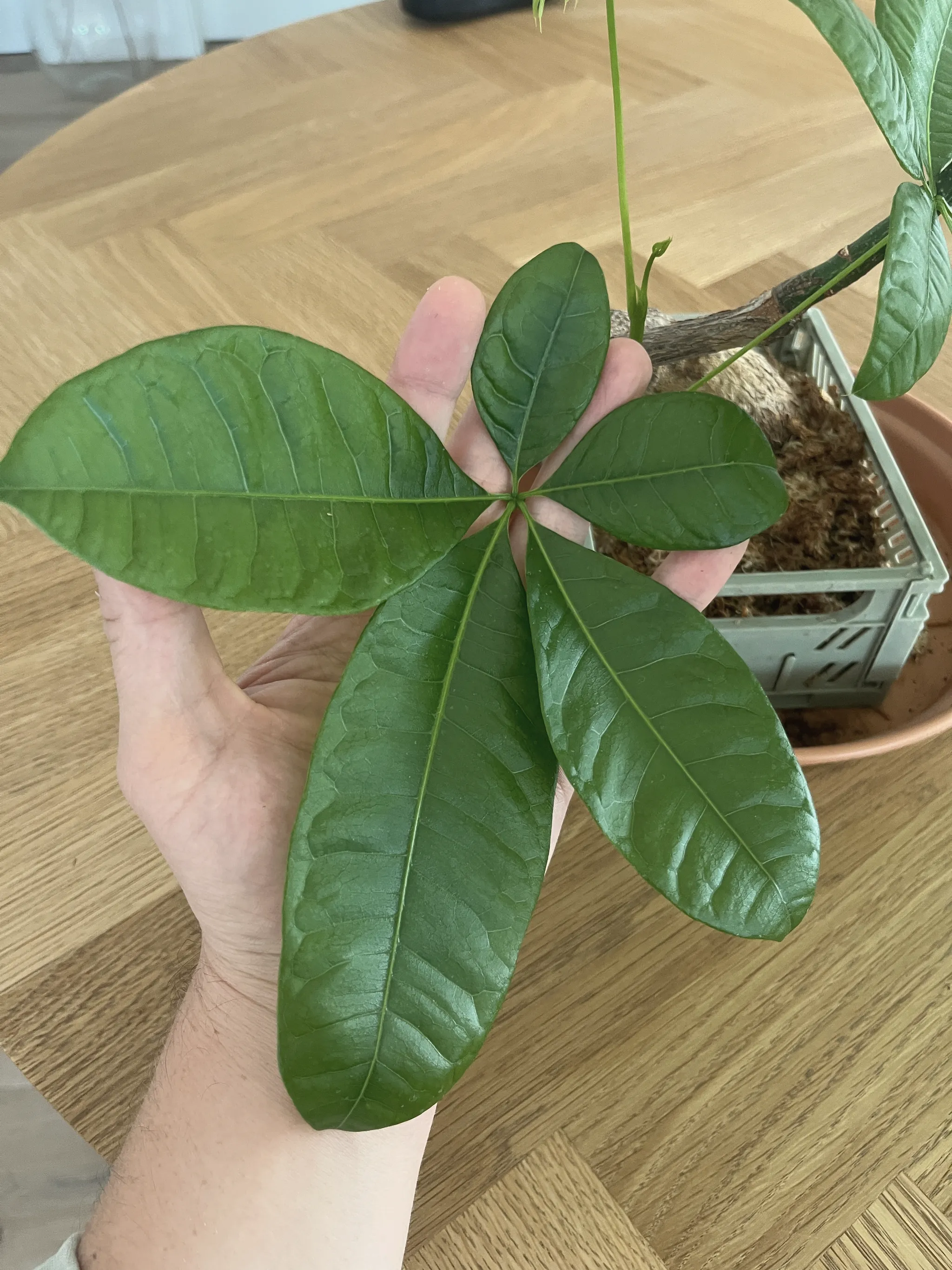
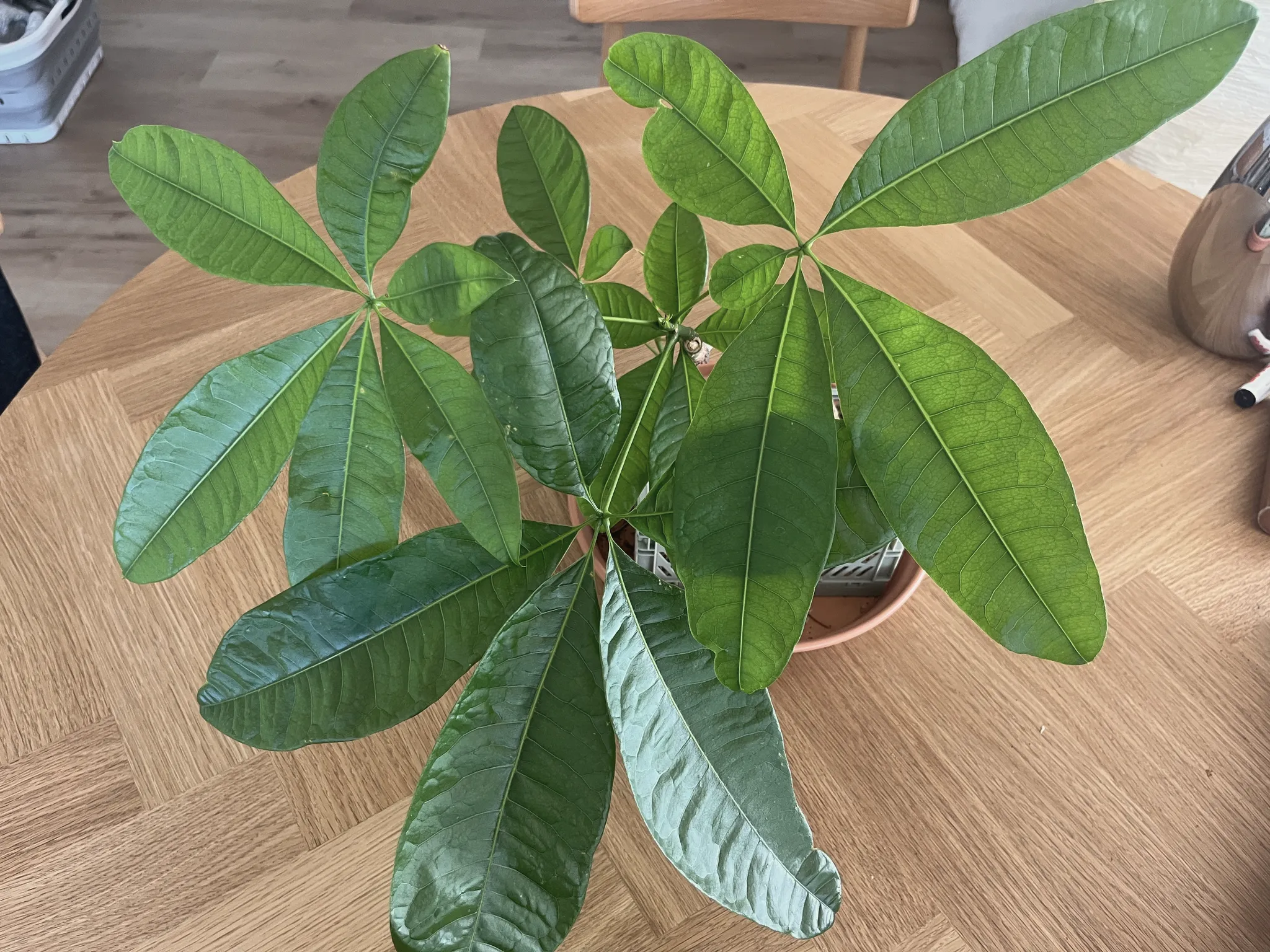
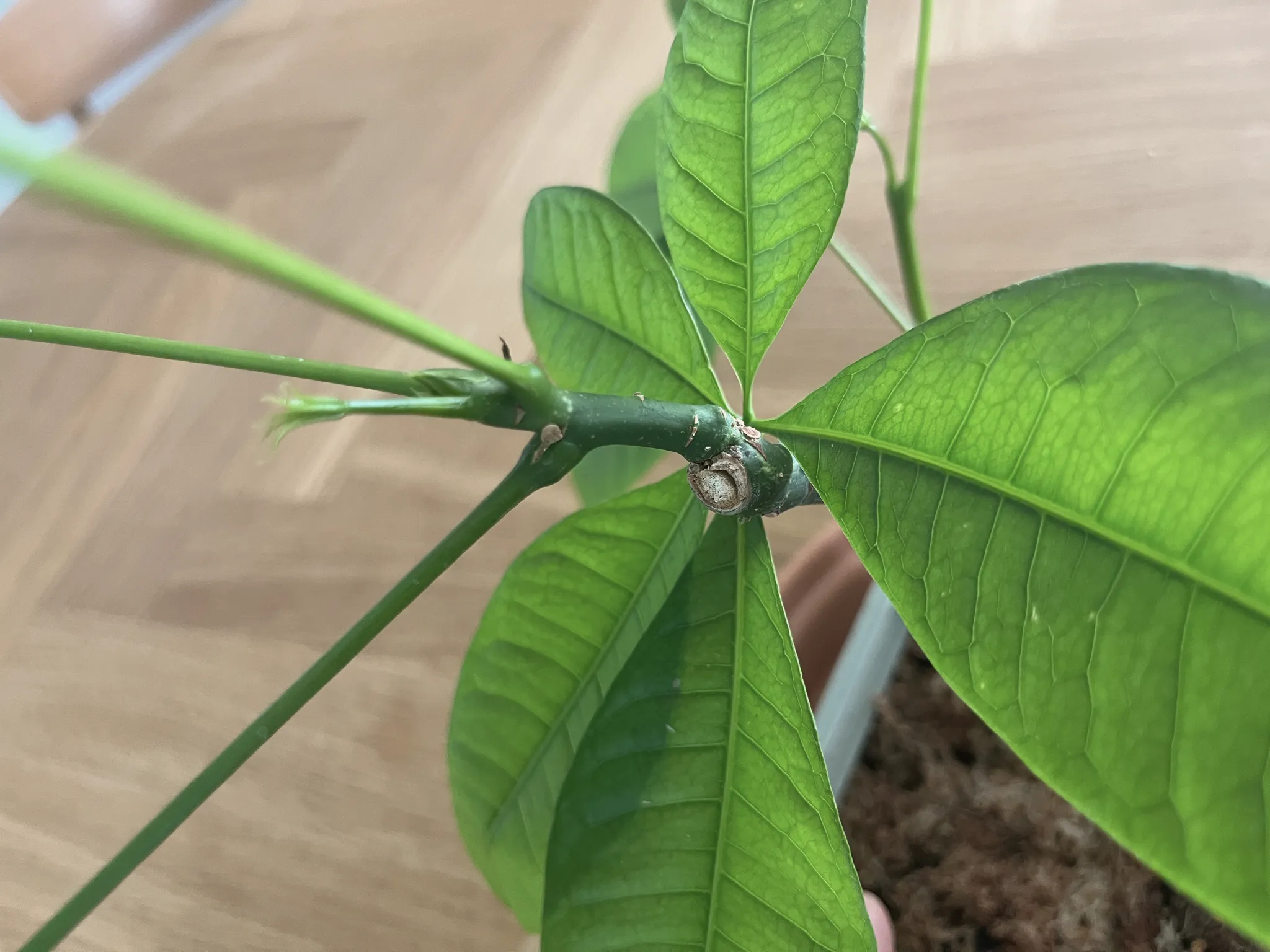
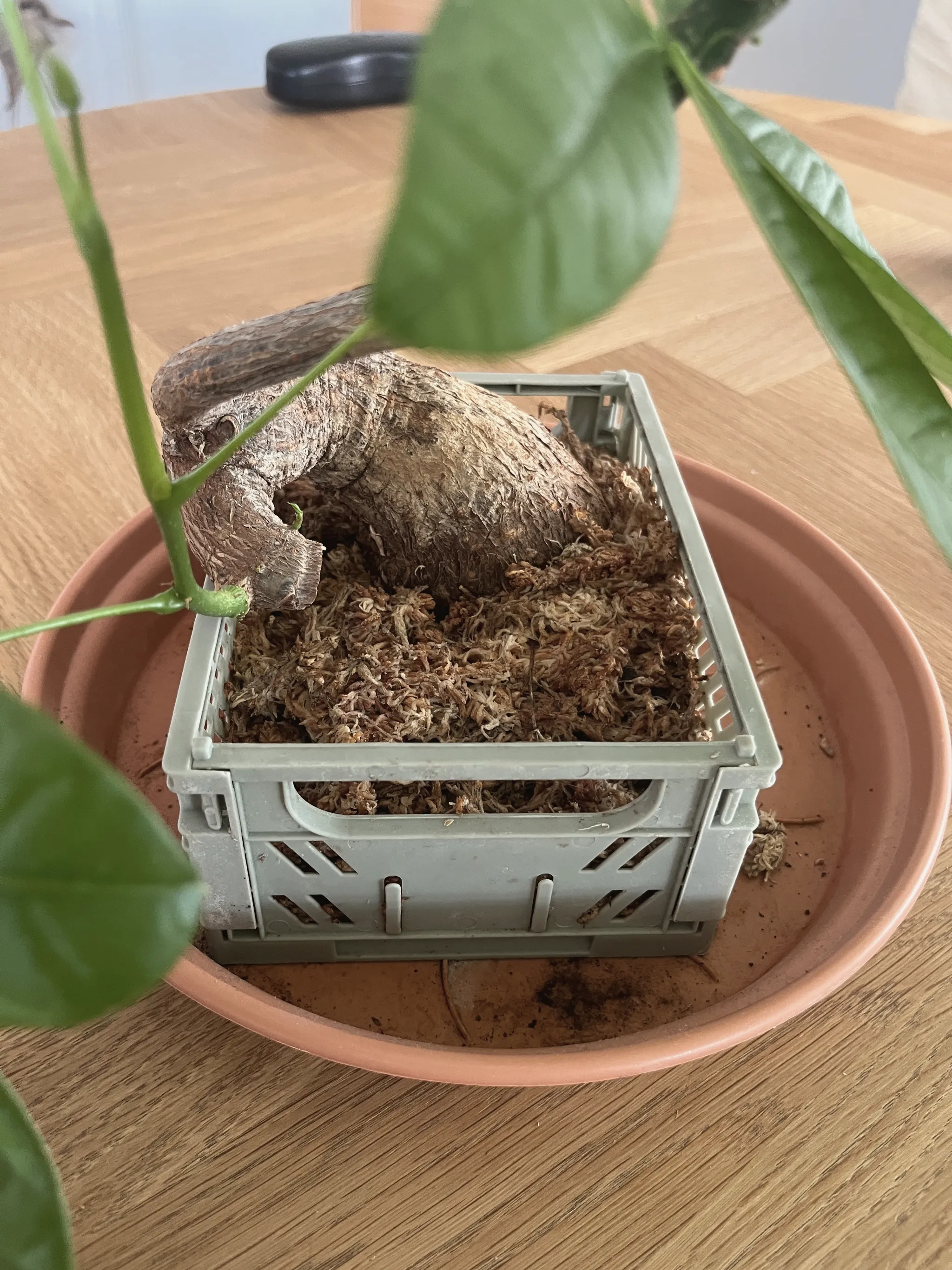
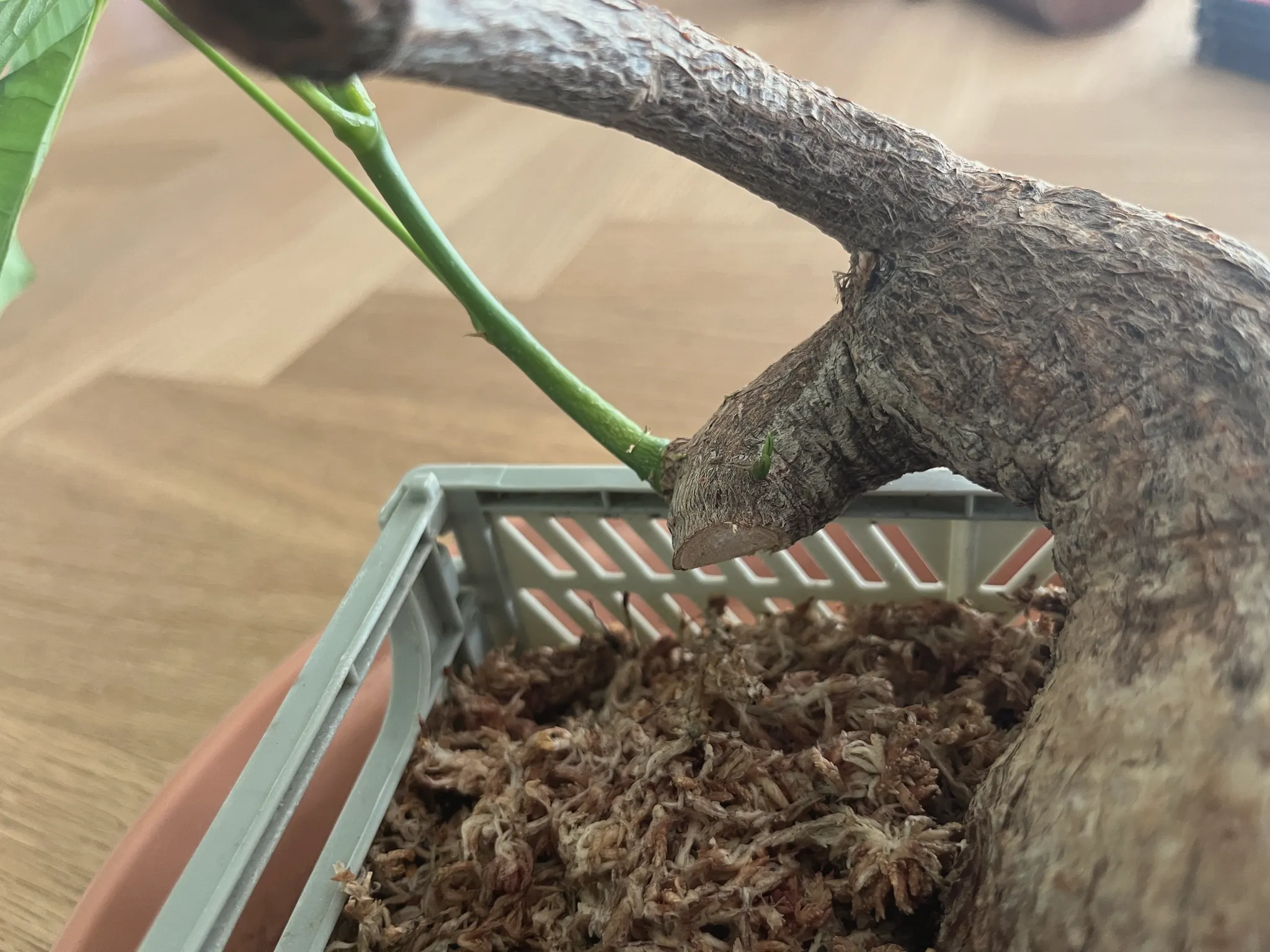
Exactly three months later this plant has actually rooted in the glas and I meanwhile (around a two month later) transfered it into an airy basket filled with sphagnum moss. This substrate holds plenty of water and provides oxygen at the same time. People in the bonsai world use it to rescue plants that suffered in the root layers. It’s also used to propergate by air layering trees on nurseries. A real magical resource.
The images are taken at a time (5th of August) where the plant had around one month of contact with the spaghnum moss and the roots seem to have established well, since it grows huge leaves that are larger than my hand. Also super nice, that it back buds from the heavy cuts I made and produces new shoots. I will fertilize it one time now and leave it for a bit more, before I try to move it into a new container.
- Pot
- Ø 25 cm · 20 cm deep
- Soil
- organic 40% · gritty 10% · pumice 30%
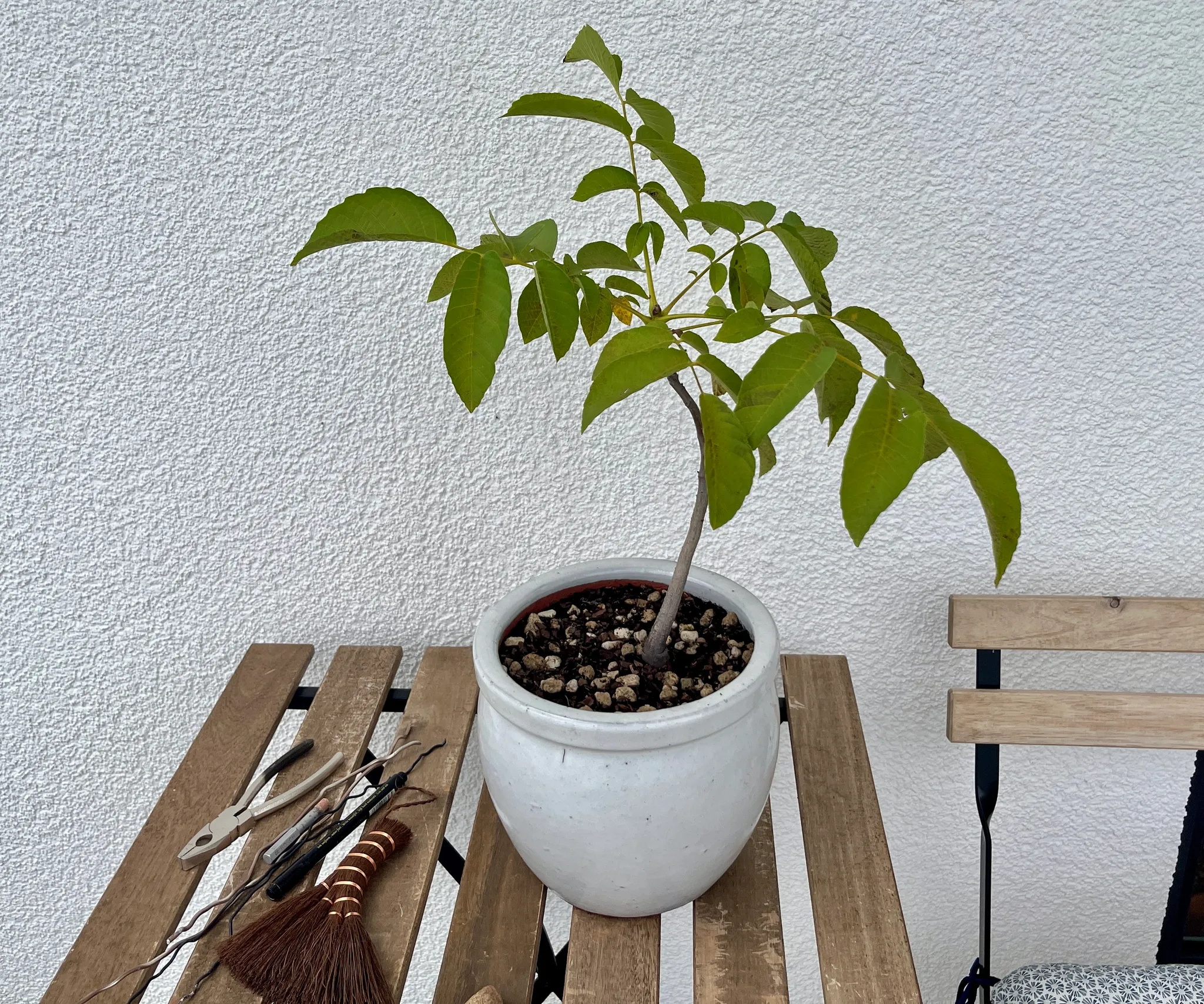
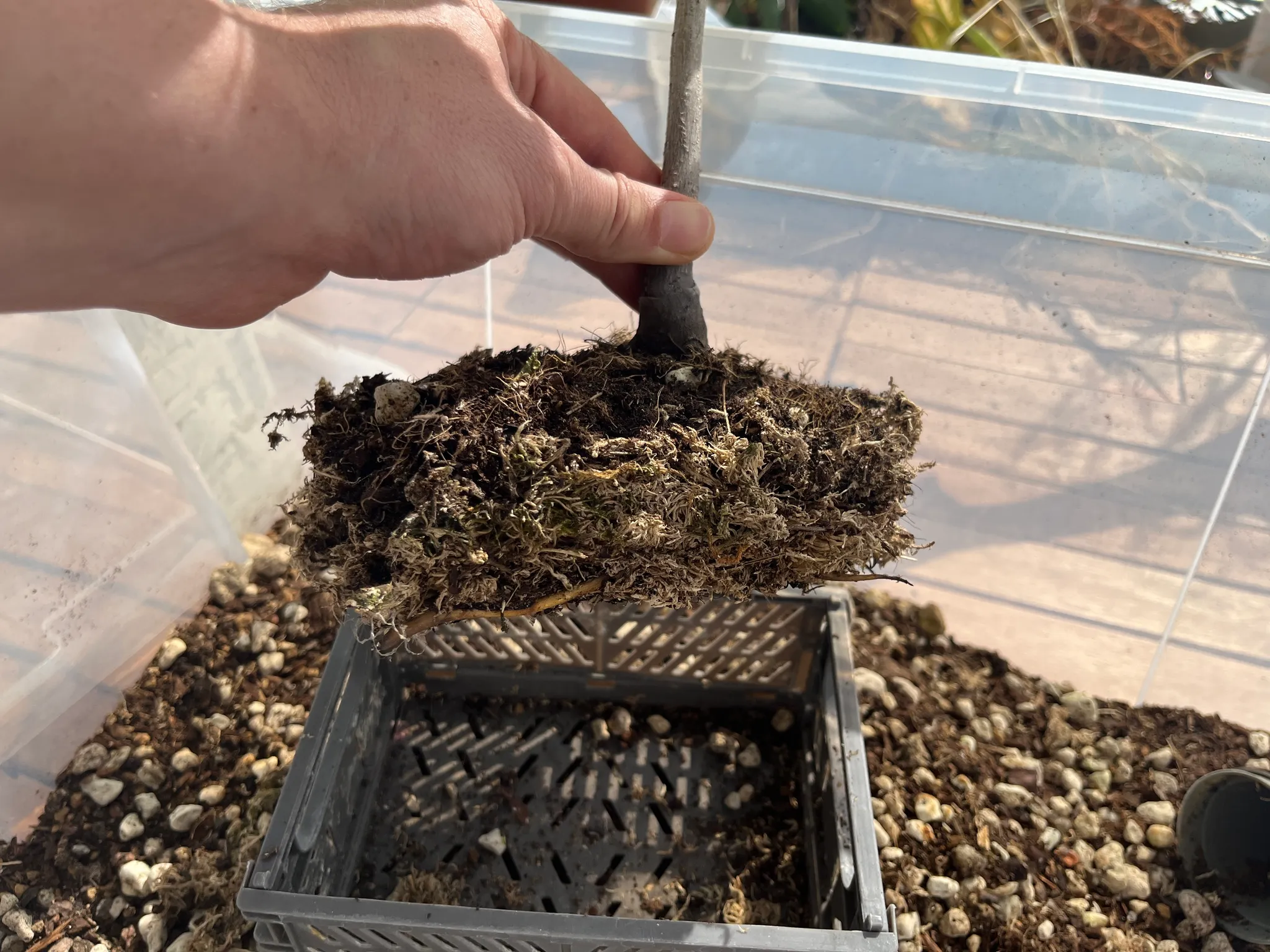
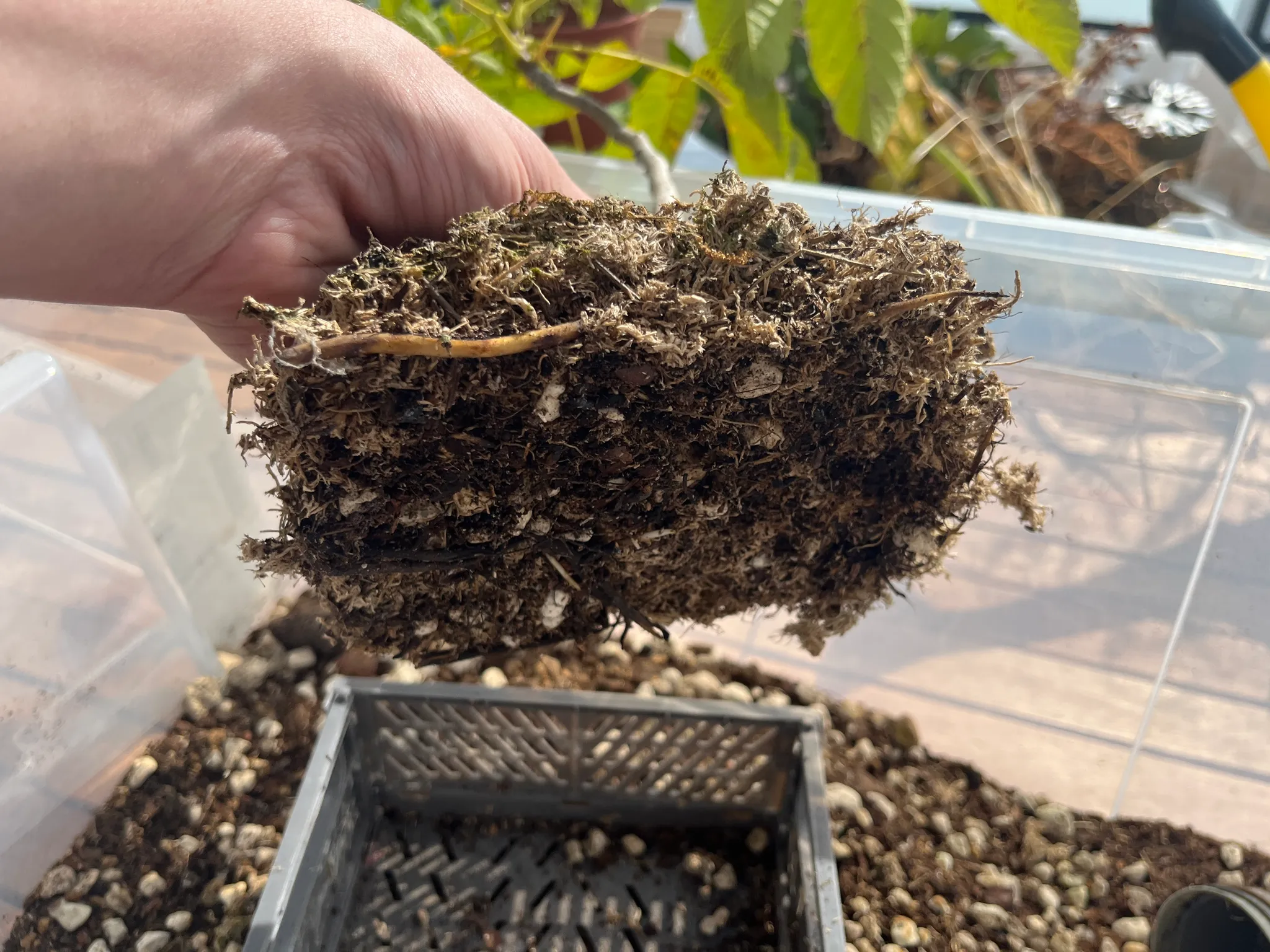
Since this tree recovered so well - it didn’t really grow much 1-2 cm at max, but it got leaves and healthy roots again, I deceided to repot the tree back into a pot. I did it because I want to overwinter it in the cellar (that has a small window) because I’m afraid of the frost. My friend who gifted me this tree originally, also overwintered it in her cellar, so maybe it’s better to repot it now and keep it save. Overwatering is a problem I think so the pumice part of the soil mix is pretty large. Let’s see how it turns out.